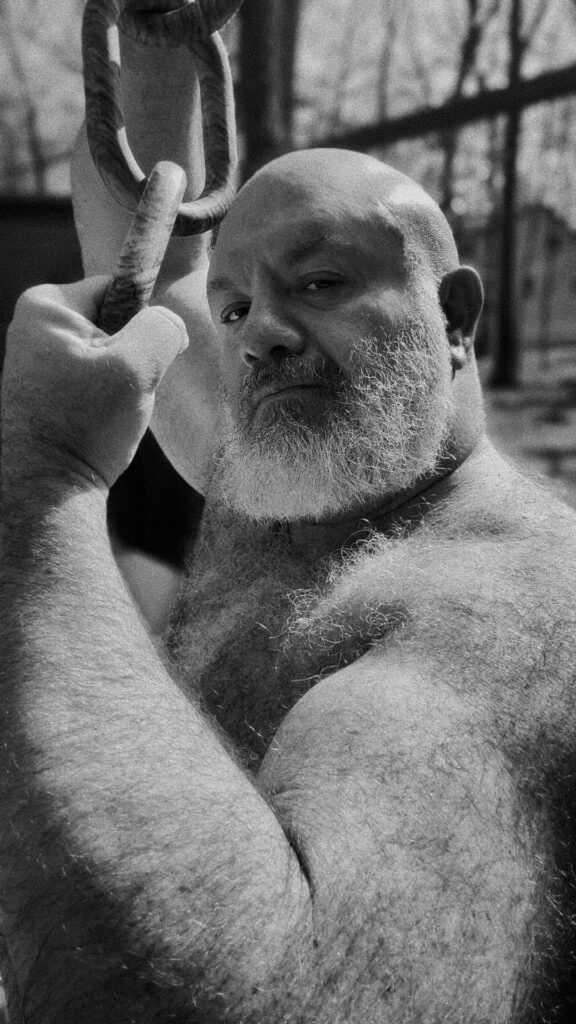
We had the chance to speak with Paul Andrews about his new music, overcoming his ongoing health issues, and exclusively premiere his latest music video for new song “Touch and Go.”
Paul Andrews is no stranger to the world of creating music. In fact, he’s been in the scene as an artist for quite some time, but his journey as a musician started as a child when his mother got him and his brother piano lessons.
in Elementary School, he learned how to sing, play guitar, and clarinet. In Junior High, he learned several more instruments through joining the school’s jazz band, such as the saxophone, bassoon, flute, and string bass. In college, Paul majored in Music Theory and Composition with a concentration in Vocal Performance where he took composition lessons, voice lessons and arranging classes.
With these foundations set, he worked on local music projects in the D.C. area until he moved to NYC after meeting Dwayne Alexander who worked with ASCAP in the early 90s. Dwayne got him to write and composed for other musicians and worked very closely with him. This led to him falling in love with remixing songs, and eventually to working directly with multi-Grammy award winning record producer Phil Ramone.
He took a break for several years after Phil’s label was sold and got a “real job” to pay his bills in the city, but in 2012, he found out that his friend Dwayne was tragically killed, so he created a mix in his honor with the same sound that attracted Dwayne when they first met.
One mix led to another, and before Paul knew it, he was back into creating and crafting music. This time was different though because he was doing it exclusively for himself. Since then, he’s self-published dozens of tracks. We’ve covered him a few times before on Bear World Magazine too, check those out by clicking here!
After his last album release in 2022, he came down with Bell’s Palsy, and has spent the last several years managing it while also trying to figure out how he can continue creating and releasing music. His story really touched me when he reached out to us, and I just knew right away that I needed to interview him so he can share that and his new music with the world.
His latest track titled “Touch and Go” releases on all streaming platforms tomorrow, June 5th, but after reading his interview below, he’s given us at Bear World Magazine an exclusive premiere of the song and the music video for it too!
The song is such an ethereal and bouncy dance-pop track inspired by 80s alternative bands with a steady tempo, softly accompanied by Paul’s sweet vocals. The lyrics are catchy, especially the hook, making this a perfect addition to your summer playlist and beyond.
Check out the interview with Paul below where we discuss his health journey, more about his history, and his new music. Be sure to watch the exclusive music video premiere of “Touch and Go” afterwards!
Bryce Quartz: Hey there, Paul! Thanks for taking the time to chat with me today. How have you been feeling and doing lately?
Paul Andrews: I’ve been just okay, but I’m good with being just okay. Trying to manage the stress that comes with our current state of the world, keeping a balance of how much I need to know and how much I need to have my own peace. Dealing with some health issues, but I’m living a life with a lot of love.
I hope that answer wasn’t too severe for the first question! Just want to be honest.

Bryce: You’ve been putting out music for quite a while now, so for our readers who are reading now that are new to you, can you give us some background and history in being a creative?
Paul: Sure. I was definitely a creative kid. I started interacting with music when I was very young. Singing to the radio was always fun. My mom had some instrumental records in her collection; I started making up lyrics and melodies to them. My mom had great taste in music. I was exposed to all kinds of sounds from her collection.
I was about 4 or 5 when I started piano lessons. I learned other instruments throughout school. I played in band, orchestra, jazz band, all-county, all-state. I sang in the choir. I received a degree in Music Theory and Composition.
I moved to New York City in the early 90s and got into the dance scene quickly. I started writing and producing dance and R&B songs. Even placed a song with Phyllis Hyman. Remixing offers started coming and I ended up doing work for Dolly Parton, Gloria Estefan, Robyn, and some other artists. Did remix and production work directly for Phil Ramone too.
In late 1999, I started a long break from music. I needed some financial stability, so I entered corporate America.
I started music back up again in 2012, taking advantage of new platforms that delivered music directly to listeners. I took a new direction in my work, experimenting more and not caring about the commercial aspect of it. I ended up doing remixes for Basia, Wang Chung, and even Madonna.
Then one day I decided to stop remixing and concentrated on being a singer/songwriter. I told myself there was no excuse for me not to release my own music.
Bryce: For your own music, can you describe to our readers a little bit about the sonic aesthetic and vibe in what you create as well as any inspirations that helped shape your sound?
Paul: I have this affinity for lush chords. Triads aren’t my thing! Composers like Debussy and Jobim really inspired me with their exploration of harmony. For me, extended harmony is like really good chocolate.

When I was old enough to start buying my own music, my ear guided me towards artists and bands like Tears for Fears, Prince, Wendy & Lisa, Eurythmics, Blondie, Pretenders, Culture Club, George Michael, Grace Jones, Pointer Sisters, Anita Baker, Journey, Steely Dan…
I started noticing names like Trevor Horn, Jimmy Jam & Terry Lewis, Arif Mardin, and David Foster on the album credits. They were fantastic producers. I wanted to follow all their work. I dove deep into catalogs from Burt Bacharach/Hal David, Antonio Carlos Jobim, Carly Simon, Brenda Russell. I wished I could write like them.
When the Sophisti-pop genre started (coming out of the new wave scene), I found my music. Basia, Swing Out Sister, Sade, Simply Red. It was a combination of jazz harmonies, lush arrangements, great melodies on top of a good beat.
But at the same time, the alternative music scene had started (coming from punk and new wave). Here the music was very experimental, some of it not very commercial at all. There was freedom in the sound. It was so good. Pet Shop Boys, Depeche Mode, Seal, Cocteau Twins, Siouxsie and the Banshees, The Cure, New Order…
I was influenced by all of that and I still want to learn more. I’m not quite sure how to categorize my music. I’ve asked Tom (my husband) before how he would characterize my sound. He always responds, “Paul Andrews”.
I can say that you’ll probably find my music to be melodic with interesting harmony and a prominent beat. Oh, and you’ll find the sound of an older gentleman trying to work what’s left in his range!
Bryce: When I first discovered you recently and heard about your story with battling health issues, I was extremely touched and related so much to you as someone who’s a creative that was setback from onset health problems. Can you tell us a little bit about what’s been happening in that regard since we last spoke with you here on the magazine and how it’s effected your outlook on life?
Paul: First, I want to say that I’m really sorry you’ve had a tough experience. I know health issues can be very hard to deal with, and it does take up a lot of space in one’s mind. But Bryce, it’s not going to stop you from doing amazing things.
Yes, I’ve had quite a few health issues recently. It was a little more than 4 years ago when I got Bell’s Palsy on the left side of my face. It happened right after I released my second album. Needless to say, I stopped promoting the album and retreated to my cocoon.
I had a very severe case of Bell’s Palsy, and my face never fully recovered. I was told I had about a 70% recovery of my movement. Luckily, my eye was able to fully close, but I lost the ability to fully use my mouth. My left ear closes up too when my face is moving. Not great for a musician.

That time period was so dark for me. Not only did I have a face that didn’t work, but I also dealt with both my mother’s death and Tom’s grandfather’s death. We had to put down one of our dogs. I dealt with betrayals, I dealt with work issues… My body couldn’t deal with the stress, and I developed other health issues from that. I fell into a very deep depression, one that I had never felt before. And though it was hard for me, I asked for help. Life got better. I needed time to do its job.
It took me about 3 years until I felt my speech was good enough to start recording again. I felt so empowered. I recorded most of my new album, and then in mid-April of this year, I got Bell’s Palsy again, this time on the other side. I was crushed.
I felt so uncertain about my recovery since it took me years to get the other side of my face to where it is now. But on the ride home from the hospital, I decided that I needed to continue with my album and challenge myself to be creative in how I use my voice, even if I was unable to sing properly.
Honestly, the music kept me going. I got upset when I needed to, because that’s part of the process, but I wasn’t going to let my health issues stop me from creating. There’s a reason why my album is called “Present Imperfect,” but I’ll get more into that when the album comes out!
I think the biggest lesson I learned from all of this was how I could reinvent myself. Things might take longer now, but I’m still able to do what I love. I learned that life just happens, and I need to make the most of it. I learned to find a good “I’m okay” spot in my life and got cozy with it. I learned that connection for me is important, but that I need to balance that with enough alone time. I live in my inner world (ask Tom!), but my friends always remind me how wonderful connection is.
Bryce: It’s not easy having a setback like this for anyone, but I think for creatives specifically being forced to take a step back without choice, it goes beyond the physical and emotional and into the spiritual. From what I know after already speaking with you personally, your story is extremely inspiring and relatable, and it shouldn’t be taken lightly that you’ve come back to making music since this all began for you.
What are some of the ways you’ve overcome this battle with your health to keep making music, and do you have any advice for our readers who may be going through something similar?
Paul: You know, with these kind of experiences, you are forced to adapt immediately. It’s like, BOOM! Here’s a new norm!
As part of my change, I dedicate myself to daily creativity, and not necessarily just music. Creativity is a way I connect with my spiritual side. I want to make it my way of life.
I enjoy making music. It’s such a rewarding process. You’re creating something that doesn’t physically exist, but it can have such a big impact. It can make you feel a certain way. It can express a certain emotion. You can sing a song to yourself and feel joy or sadness. It part of so many memories. It’s magic.
So for my music, I found creative ways to compensate for my lack of enunciation. I started rewriting lyrics when I couldn’t sing them. I got creative with rhythms and had background vocals take care of singing lines so I didn’t have to sing the lead part too fast. I even held one side of my mouth closed for certain parts because what came out sounded normal that way!
But after going through something like that, I want to go beyond just sharing my music. I want to share my experiences to show others that life happens to everyone. And yeah, it can really suck so bad, but there are really good moments that happen too. I want to share both sides. Life can’t be off-the-wall happy all the time. That’s not a true representation of life no matter how much of it we see on social media.
If anyone out there is dealing with a similar issue, please be kind to yourself. Allow yourself to feel what you feel. Ask for help. When you’re ready, try to find the joy in what you’ve enjoyed before. Things may be different, but that doesn’t have to stop you. I promise, you will find out so much more about yourself.
Bryce: Following up on that last question, you’ve just put out your latest track “Touch and Go,” which is the lead single from your next album, despite the efforts of your body trying to stop you from doing so. Can you tell us a little bit about this song and how it came to fruition as well as what we can expect from your upcoming album?
Paul: This song came about just from playing around with synth pads over a drumbeat. The first line just came out of nowhere: “I’m almost certain it’s too late.” It got me thinking of arguments couples have when things get bad. Recently, a few close friends of mine ended their long-term relationships. I tend to think of my friends a lot, so I was carrying around their pain with me. I wrote about it.
In the song, it’s actually one person playing both people in the relationship, which represents me internalizing their pain. But I didn’t want the song to sound like the relationship was over. I’m an optimistic guy, so I try to keep some form of hope in my writing.
Musically, I was inspired by 80’s alternative dance music. The sparse pad arrangement was inspired by Liza Minnelli’s “If There Was Love”, where the vocal is held by warm pad sounds (à la Pet Shot Boys). I wanted a song of pads. Pads are good.

I chose this song as the first single because it felt different for me. The concept flowed out of me. I found the right sounds to use easily. I completely went with where the song was taking me and I really felt something about it. I wanted to embrace the difference of this song and release it first, even though I had some other good contenders ready to go. And I love how my friend Andy Bradfield mixed it. He’s so good at understanding feel. You need to hear the Atmos mix he did!
And the upcoming album… this one feels very different for me. I did a lot of experimentation, but I wanted it to still be relatable. I played a lot with creating different sections, having ideas live in a different space. I wanted each song to have its own sound and character. The ideas were flowing and it felt good.
Bryce: I always love to ask this question to other musicians: what does the song creation process typically look like for you, such as how you go about writing lyrics, finding the right sound for the instrumental, and how you form a rollout plan before giving your art to the world?
Paul: You know, I don’t have a set way I come up with songs. I have melodic and lyric ideas all the time. Sometimes I can hear the finished version of a song in my head. I use the voice memo app on my iPhone to record my ideas. I use Apple Notes to collect lyric ideas.
Sometimes I have arrangements in my head and I try to get that out as quickly as possible so I don’t lose them. Sometimes I sit at my keyboard and go through sounds on my computer and see if the way I play a sound inspires a song out of me. Sometimes it’s just old school writing; sitting at the keyboard and singing.
Lyrics for me just happen. I know the themes that I want to explore, but sometimes I have to wait for a good lyric to fall out from the sky to get a good grip on how to approach those themes.
Sounds for me are VERY important. I tended to work with more traditional sounds in the past, but I challenged myself to use more synth sounds on this album.
One of the things I love about all of this is how sometimes you discover better ideas along the way, even though those ideas weren’t a part of the initial idea, and then your songs takes on a whole new direction.
Initial ideas, those creative sparks, are great for starting a song. But I believe ideas can be improved by stepping back and letting your editorial side take over. That’s where your “taste” comes in. Not all ideas work. I think it was Quincy Jones who said, “The best writers are the best rewriters.” I understand that.
As far as the rollout plan goes, that part is NOT the fun part of music. Anything music business related is not fun for me, but I know it has to be done. For the new album, I intended to record 11 songs, but then pulled back to 10 because of my condition. I’m confident that I can finish recording the last 3 songs within a couple of months. I need to get this album out and move on to the next project!
By the way, the way music is released now is completely different than before. I’m seeing more artists release all their singles leading up to the album release and then that’s it. I’m not sure how I feel about that yet.
Bryce: As a musician myself, I know that creating and releasing something new takes a lot of hard work, time, money, and grit even without battling with your body. In the era of generative AI being used across all art forms, it can sometimes feel like the power and core ethos of making music is stripped away because of that.
We talked about this before, and I’m wondering if you can share with our readers about how generative AI has stripped the catharsis of becoming a musician, working hard on something til it’s released, and building community for yourself through collaborative efforts with other artists?
Paul: I think these companies that are pushing generative AI as a creative tool are missing the point: There is joy in the process of creating. There is challenge in the process of creating. You’re basically learning more about yourself each time you create and push to extend past what you already know.
That kind of discovery and growth can never happen with generative AI. There can’t be a feeling of accomplishment with generative AI. The journey is missing.
Why would any serious artist want content from generative AI when its just spitting out what’s already been done? A prompt is a request, it’s not creation.
Our art IS who we are! It’s a vehicle to represent our unique perspective of the world, and people then connect with that perspective. Why would anyone want an algorithm representing who they are?
From what I’ve been reading from artists, the idea of working with someone who uses generative AI for their work is not enticing. I can’t see true artists collaborating with someone who relies on generative AI for their output. I won’t even get into the copyright issues!
Bryce: This has become a staple question in every single interview that I do, the proof is in the pudding! Also, I’m just always hungry haha What are some of your personal favorite foods, dishes, and restaurants that you’d recommend?
Paul: My number one food is something that I don’t have all the time. NACHOS! Good nachos have beef, beans, cheese, pico de gallo, jalapeños… and love.
Kung Pao Chicken is my go-to when I get Chinese food. Vanilla ice cream with some kind of chocolate peanut butter thing inside does it for me. Bacon, egg, and cheese on a bagel is heaven. Coffee and Diet Dr. Pepper makes me happy.
I love a good diner. Reminds me of my early days in NYC. And if I have to do fast food and there’s a Popeyes around, that’s where you’ll find me. I sound so healthy!
Bryce: I am curious to know: what are some of your hobbies and favorite pastimes beyond creating music?
Paul: We live in the mountains. I enjoy being surrounded by nature. Just feeling in tune with my surroundings calms me. I spend time outside every day and reflect on life frequently.
I love bodybuilding. There is a sense of accomplishment when you finish a good workout. It helps me concentrate on the moment and teaches me discipline. Unfortunately, with my Bell’s palsy, I haven’t been able to work out since it could hinder my recovery. Hoping to start again soon.

All of my close friends know I’m a huge volleyball addict. I played volleyball for over 30 years, but my body just couldn’t keep up. So now I watch all the indoor volleyball I can. I even travel to go watch it! And indoor volleyball has gotten very popular here in the US, which is great for the sport.
For me, no other sport has the same dynamic quality. I mean, imagine putting your body in the way of a ball being hit as hard as possible!!
Bryce: I really appreciate you taking the time to speak with me today, and am excited for everyone to hear your latest track from your new album! Is there anything you’d like to leave our readers with today?
Paul: Thank you for the opportunity! Yes, I do want to say something important to everyone reading this: Now more than ever, it’s important that we all speak up, and not just for ourselves. Our country is heading backwards towards intolerance and segregation.
We’re seeing billionaires and corporations using their money and power to influence policy that favors only them. We have a powerful community, and there’s a lot we can and must do with our combined strength to change what’s happening. The rights of so many are being attacked. We have to stand up to it.
Check out the Bear World Magazine exclusive premiere of Paul Andrews’ new music video for Touch and Go” below, and be sure to give him a follow on social media to show some love too!
Paul Andrews’ Links – Website – Linktree – Instagram – Facebook – Bluesky – YouTube
‘ The preceding article may include information circulated by third parties ’
‘ Some details of this article were extracted from the following source bearworldmag.com ’