As my wife and I landed back in Louisiana after a trip to California last month, I began thinking of a Jane Kenyon poem that I treasure. It’s called “Coming Home at Twilight in Late Summer,” and it’s about all the urgencies that greet you after you’ve been gone from home awhile.
“So much to be done,” Kenyon laments, “the unpacking, the mail and papers … the grass needed mowing.” Her poem reminded me what was ahead when we turned into our driveway.
A home misses you while you’re gone, which is a good thing, I suppose, although the longing can take complicated forms. As soon as we placed our bags into the car at the airport, our little household, peeved by our absence, began to air its grievances. The air conditioning in our car went out as we paid the airport parking fee, signaling a big repair bill that made me wince a bit after our vacation splurge.
Danny and Catherine Heitman recently took a train ride from San Diego to Santa Barbara during their trip to California. “A home misses you while you’re gone,” he writes, “which is a good thing, I suppose, although the longing can take complicated forms.”
Pulling into the driveway after our ride home, I noticed that the gas lantern on our porch had blown out in one of the rainstorms we’d missed while we were gone. Fire ant mounds rose like volcanoes from the corners of our lot, and our grass, of course, was as tall as corn.
Inside, a kind someone had saved our newspapers, arranged as neatly as cordwood just beyond the threshold. A little mountain of unopened parcels sat on the rug, and there was a stack of junk mail at its summit.
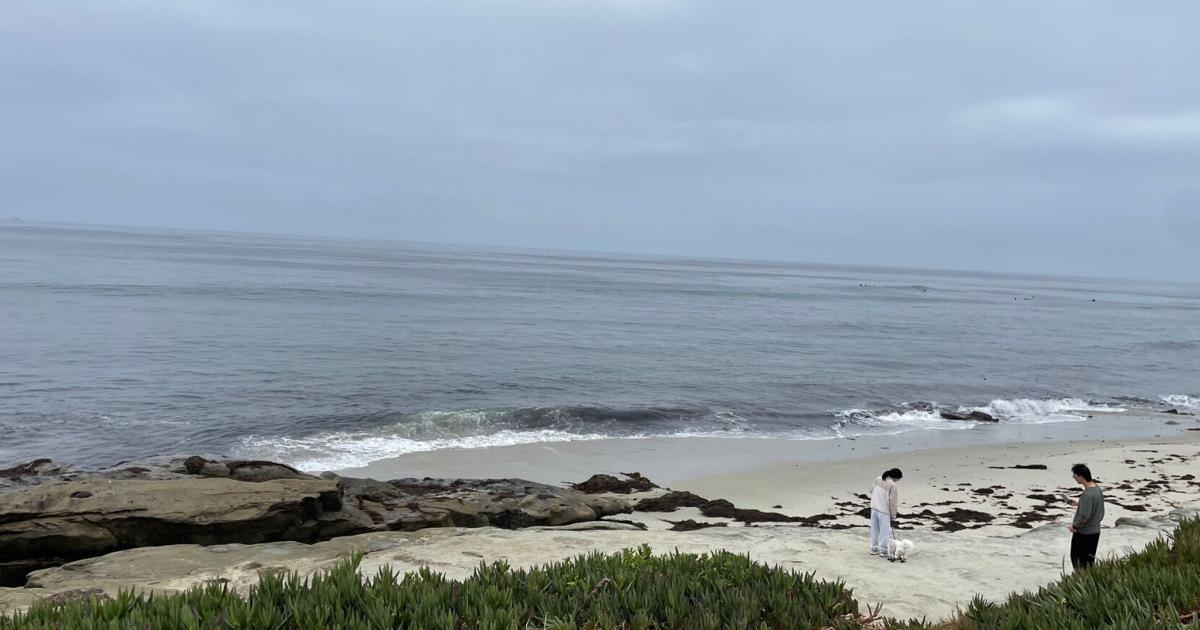
Slowly, we began to empty our luggage of laundry, which quickly formed a hill near the washer. Like a midden of relics from a lost civilization, it yielded small clues about the life we’d led on the road. There were swimsuits from our evening in a hot tub, a shirt stained with caramel from an afternoon at an ice cream parlor and socks still crusted with sand from a lovely Pacific beach.
Over several days, we reclaimed our regular life.
I pushed our mower over the high blades of grass, and the yard shed its shaggy excess and revealed a calmer, saner self. I restocked our birdfeeders, repairing one that had been pillaged by a squirrel. The garden fountain, which had shorted out when we weren’t around, is fixed and working again.
It’s only now, in the return to routine, that I’ve had time to think about the second part of Kenyon’s poem. In the concluding stanza, after reciting the humdrum list of chores that awaits a returning traveler, she remarks on a household pear tree, heavy with fruit, that had worked up its bounty while she and her husband were on the road.
What Kenyon seems to say is that leaving home is a good way to savor its wonders when you return — something I’m learning again now that our luggage is back on the shelf.
‘ The preceding article may include information circulated by third parties ’
‘ Some details of this article were extracted from the following source www.nola.com ’