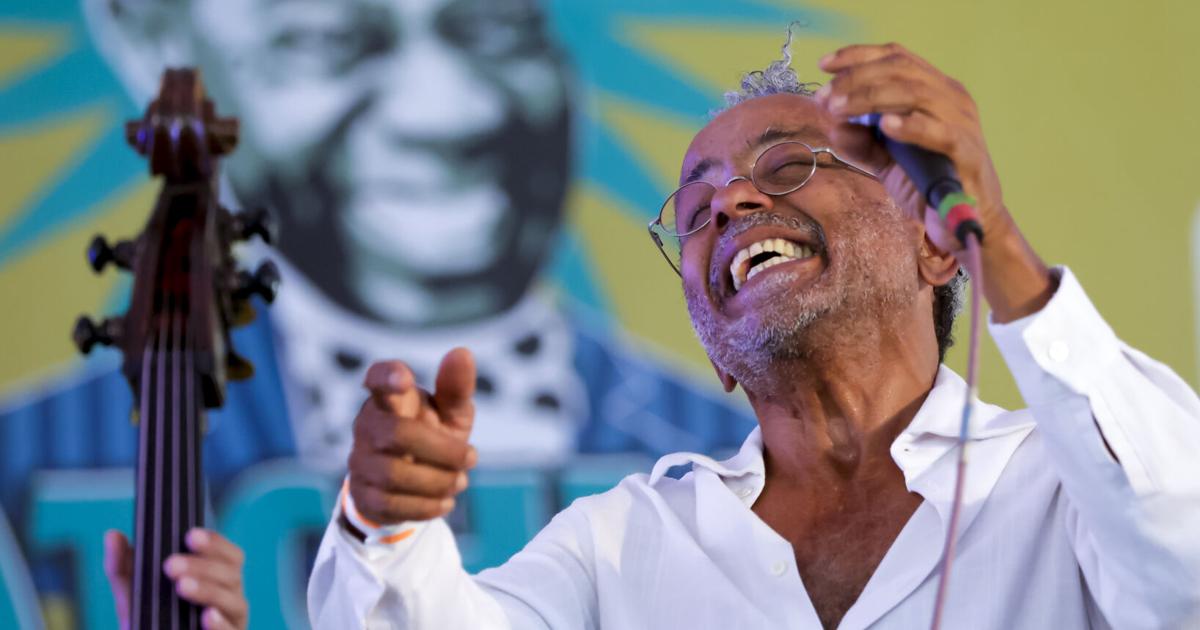
Louis Armstrong’s virtuoso talents and charm earned him a singular place on top of the jazz world, as well as international fame and popularity, which can obscure his very humble beginnings.
He adored his mother, though she sometimes left him to take care of his younger sister for weeks at a time. She drank heavily and was arrested for prostitution. Armstrong has talked of standing up to bullies in his neighborhood, and for a while, he worked carting coal in Storyville, which inspired entertaining recollections in his autobiography.
But for all the hard knocks, he always thought of New Orleans as his home and wrote fondly about his young life.
“When you read his book, Louis tells everything with a wink and a smile: “Well, we were poor, but we were happy,’” says Ricky Riccardi, who earlier this year released the biography “Stomp Off, Let’s Go: The Early Years of Louis Armstrong.” “At the same time, I am coming across arrest records and alcohol. It was definitely darker than the picture he paints. It was a scary, uncertain time: racism, hunger, poverty, the police. It’s all real, and it’s scary. But Louis had his mother, he had Black Benny and Joe Oliver. He had this community that nurtured him, protected him and made sure that he emerged a great man and a great musician.”
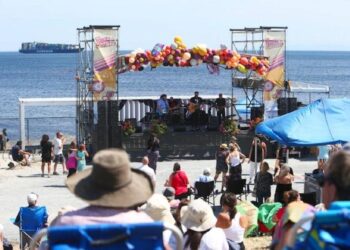
Riccardi will discuss Armstrong and his mentor Joe Oliver and other related topics at Satchmo SummerFest at the New Orleans Jazz Museum on Aug. 2-3. The annual festival features two music stages outdoors and one indoors, as well as panel discussions with talks about Armstrong’s life and music and related subjects.
Satchmo SummerFest is marking its 25th anniversary. It was founded on roughly the centennial of Armstrong’s birth, though that is a subject of disagreement. Armstrong always said he was born on July 4, 1900, though scholars point to a birth certificate that says Aug. 4, 1901. Riccardi examines that and gives great deference to Armstrong’s views of it in the book.
“Stomp Off” offers a lively chronicle of Armstrong’s youngest years and offers new insight about when he first learned to play music and who might have influenced him. It details where he lived, in both the home of his grandmother, who was born into slavery, and with his mother, and the community that nurtured him.
“In ‘Satchmo: My Life in New Orleans,” people got frustrated that he didn’t talk so much about the music,” Riccardi says. “He spends pages talking about Black Benny and Joe Oliver and pimps and gamblers and all that stuff. I think there was a reason for that. I think those were the people who allowed him to become Louis Armstrong.”
Riccardi has released two books about Armstrong’s adult life, “Heart Full of Rhythm: The Big Band Years of Louis Armstrong” and “What a Wonderful World: The Magic of Louis Armstrong’s Later Years.” He says it seems odd to do his books in reverse chronological order, but it worked to his benefit. In the last decade, new sources have become available, many of them due to the internet and digitization of all sorts of records.

Riccardi is the director of research collections at the Louis Armstrong House Museum in Corona, Queens, New York. The son of an editor for Armstrong’s “Satchmo” autobiography gave the archives an original, unedited manuscript, which Riccardi used heavily for his book. He also received transcripts and documents that have become available from Lil Hardin, Armstrong’s second wife. There also were volumes of past interviews posted online, and the Tulane Hogan Jazz Archive has papers from Tad Jones, who did extensive research about Armstrong’s early years.
The picture is fascinating, with accounts of Armstrong in the rough Backatown neighborhood and at the Colored Waif’s Home for Boys, where he was sent a couple of times, most famously after shooting a pistol on New Year’s Eve. Armstrong quickly became the leader of the institution’s band.
Riccardi will discuss the book at 4 p.m. Sunday at the Jazz Museum.
Riccardi also is a Grammy winner this year. His 40,000-word liner notes for a box set of work from Armstrong mentor Joe “King” Oliver won a trophy, as did the box set for best historic album. Riccardi and Archeophone Records’ Richard Martin and Meagan Hennessey will discuss that project at 1 p.m. Sunday.
Riccardi also is a pianist, and he’ll play his first proper set at the festival. He’ll perform duets with Preservation Hall Jazz Band leader and trumpeter Wendell Brunious at 2 p.m. Saturday inside the museum.
Other highlights of the scholarly portion of the festival include Robert Cataliotti discussing Armstrong’s work with women singers including Ma Rainey and Bessie Smith (noon Sunday). Professor Robert Mikell screens clips of Armstrong on film (1 p.m. Saturday). There also are sessions on musicians Dexter Gordon and Joe Darensbourg.
The festival’s music lineup features traditional jazz and more. Saturday features Delfeayo Marsalis and the Uptown Jazz Orchestra, Joe Lastie’s New Orleans Sound, Victor Campbell, James Andrews and the Sons of Satchmo, Anjelika “Jelly” Joseph, Don Vappie and the Blue Jazz Band, Young Fellaz Brass Band and more.
Sunday has Kermit Ruffins’ Tribute to Louis Armstrong, John Boutte, Charmaine Neville, Kyle Roussel with Quiana Lynell and Erica Falls, Shamarr Allen with Cyril Neville and more.
There’s also a Jazz Mass and second line parade on Sunday. Visit the festival website for a schedule and full list of events.
Satchmo SummerFest is a free festival. Find information at satchmosummerfest.org.
Ricky Riccardi discusses and signs copies of “Stomp Off, Let’s Go” at 6-7:30 p.m. Thursday, July 31, at Octavia Books.

‘ The preceding article may include information circulated by third parties ’
‘ Some details of this article were extracted from the following source www.nola.com ’