In the run-up to the 2026 Oscars, the witch is taking center stage.
This time, she is rooted in the Earth; she’s a protector and nurturer guided by her feminine instincts. At this year’s BAFTAs, both Wunmi Mosaku for “Sinners” and Jessie Buckley for “Hamnet” took home wins for doing exactly that. They both play women whose power the world has always feared and never known what to do with.
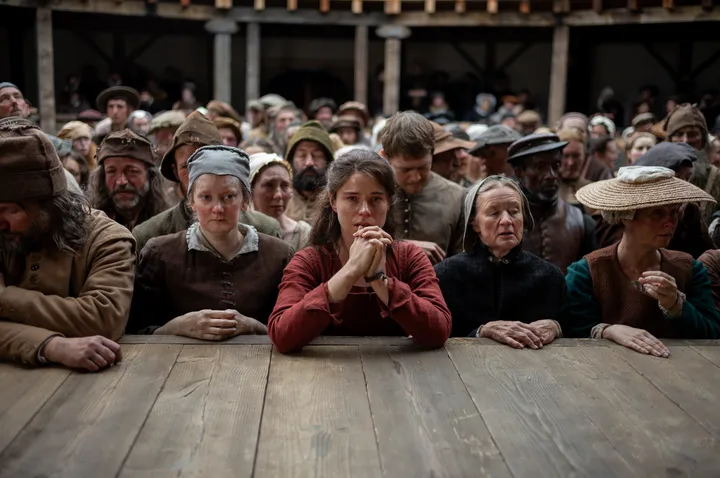
“Hamnet,” Chloé Zhao’s adaptation of Maggie O’Farrell’s bestselling novel, portrays Agnes, a woman whose authority comes from grief, sensitivity and a deep connection to the natural world. In Ryan Coogler’s “Sinners,” set in the Mississippi Delta, Mosaku is Annie, a hoodoo priestess who moves between this world and the next; she is a source of maternal depth, devotion and sacrifice. Both characters refuse to abandon what they know. And right now, in a world that is coming apart at the seams, both women have something urgent to say.
There is an immediate rawness to both performances. Some men have told me that both characters make them uncomfortable. Which is, of course, not surprising.
What is it about feminine power that is so threatening?
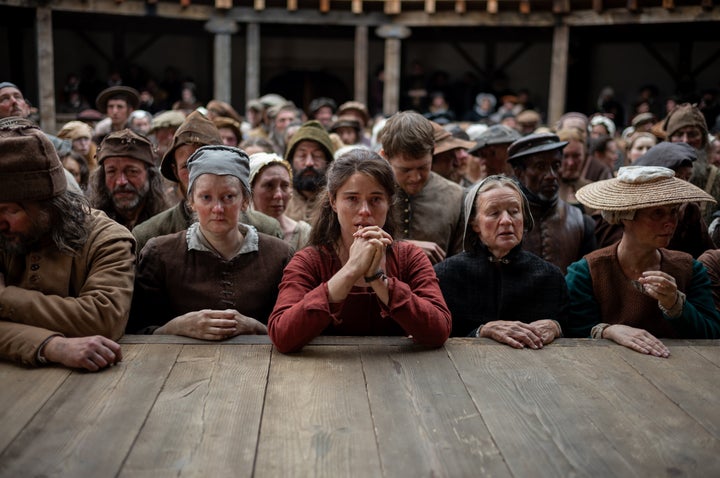
Growing up in Los Angeles, and well into my adult life in New York City, I was made to feel that my own connection to instinct and the natural world was something strange and inconvenient. I’ve been described as peculiar or strange, especially by men. Like many women with an independent and sometimes nonconforming streak, I have been called difficult.
As I sat watching both women inhabit these roles, my own grief for the world rose to the surface. We live in a patriarchal, power-hungry, optimized society and still women are villainized for practicing and standing up for their own ideals and values. We live in a time of endless wars and all-consuming violence in our personal, social and political lives, where women’s rights and personal agency are under siege, where our wrath on the natural world has pushed countless species, and perhaps ourselves, toward extinction.
Although their struggles take place in two totally different worlds — Elizabethan England and the Jim Crow South — these two roles have something important to tell us right now. Their refusal to abandon instinct in favor of convention, their willingness to be feared and dismissed to remain faithful to their beliefs, is a guide for the present.
In “Hamnet,” set in Stratford-upon-Avon, England, and shot in the bucolic countryside, we meet Agnes through Buckley’s mesmerizing performance. She emerges from the cavernous womb of a gnarled ancient tree, which passes its gifts to her. And then there is her relationship with a hawk; it beckons Agnes to take heed and listen to the natural world that surrounds her.
Zhao’s “Hamnet” shows us how difficult domestic existence was: gathering food, basic survival, nature as both friend and foe. Agnes is talked about by others in her village for being a witch’s daughter, a forest witch’s daughter at that, even referred to as a “Gypsy.” She is viewed as an outsider, someone who has never much cared for convention.
This is what feminine power has always cost. The risk of being othered, dismissed, feared. When Agnes meets Shakespeare (Paul Mescal), a struggling tutor and playwright, she enters a relationship that, although filled with love, is also demanding of compromise and hardship.
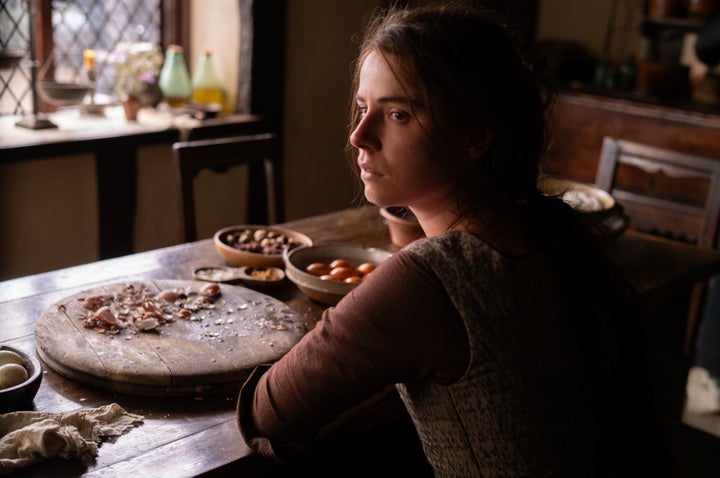
However, Agnes centers herself in a world of her own making: her ancient tree, her hawk, the children she fiercely protects. She gathers nourishment from the forest and lies still, waiting for clues and answers. Although she is occasionally deemed wayward and inconvenient, Agnes rises above the heresy and listens to her own instincts. She is in tune with her gifts. In a world that demands women shrink and comply, Agnes simply refuses.
Agnes’ resilience lies in her inherited sensitivity and instincts. The women in her family have always seen things, mother to daughter, generation to generation. It is there in the birthing room when she calls out for her own mother, and again when she strokes her seemingly stillborn daughter’s head until she stirs back to life. Her depth is defiant, inherited, built from a lifetime of trusting herself. When Agnes lets out that primal wail in the birthing scene, it becomes a cry for all of us, for how disconnected and separated we have become from what gives us life.
When Judith is stricken with the plague, Agnes turns to the forest, putting her faith in the natural world as she furiously attempts to save her child. Judith survives, but Hamnet, her beloved son, is lost and even the most hard-fought instinct cannot save everyone. Agnes’ grief reflects her raw power; she is unrelenting, refusing to be silenced.
In “Sinners,” Annie, the estranged wife of Smoke, has carried the Earth’s gifts within her. Her potions are lined up in glass bottles, containing cures. She moves through the film bathed in shadow and light. She is someone familiar with darkness but who seeks light in her fight against it.
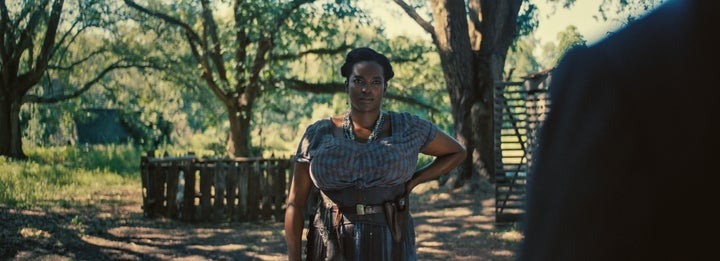
Living in relative isolation, she is called upon precisely because of what she possesses. Like Agnes, Annie’s power is rooted in what the world has tried to diminish.
Annie is herself in mourning, having lost an infant daughter, and yet she rises into her gifts. Her power is hard-fought. She imparts resilience, listens to her instincts and relies on them, becoming a vital shield for those she loves when they are threatened by forces they are helpless to control.
When we see Annie reunited with her baby in the vision, she represents the love we all so desperately need.
Pop culture has begun to reckon with witchy women. Amy Madigan’s malevolent witch Aunt Gladys in “Weapons” adheres to familiar tropes, while “Wicked” reframes its wicked woman, Elphaba (Cynthia Erivo), as morally complex and unjustly punished.
But Agnes and Annie go further.
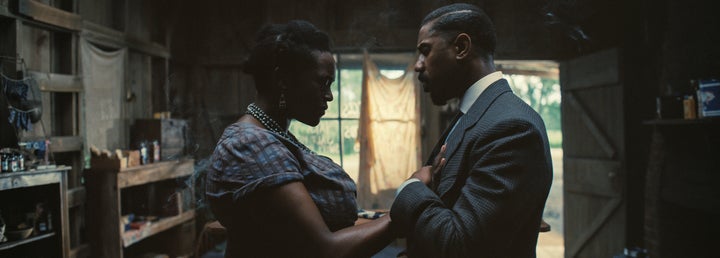
Feminine power is depicted as something far deeper than mere vengeance. It is a source for healing, rooted in respect for nature, compassion and inherited wisdom.
Everywhere I look, women’s voices are being threatened. As mothers, daughters and partners, we are spoken about, ridiculed and dismissed, separated from our children, our maternal health disregarded. Patriarchal power has harmed the Earth. And the Earth, as both women know, is the source of everything.
Perhaps this is why audiences are paying attention to these performances. What I found so thrilling about both Agnes and Annie is their unwillingness to back down, to be unapologetically who they are. There are so few representations of independent, strong women in film, and seeing them on screen feels validating and satisfying in equal measure. We see ourselves in them, and watching them feels empowering because it reminds us of all the gifts we possess.
In a time of collapsing systems, feminine power may be our strongest chance yet of surviving.
If we move through the world the way Agnes and Annie do, we may secure our future. The return of the proverbial witch, the one aligned with the Earth, with healing, with feminine power, may be the only way forward.
“Sinners” is streaming on HBO Max. “Hamnet” is streaming on Peacock.
‘ The preceding article may include information circulated by third parties ’
‘ Some details of this article were extracted from the following source www.celebrity.land ’