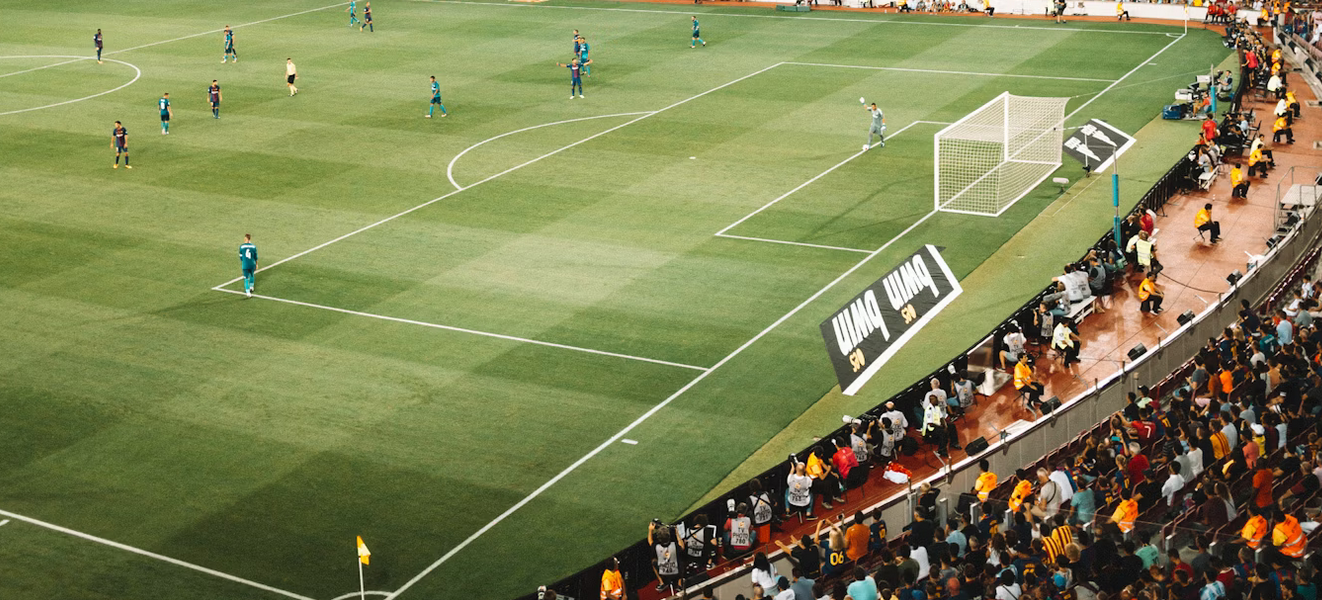
The global sports industry stands at a pivotal moment, a defining crossroads in its history.
For the last thirty years, its identity has been relentlessly shaped by spectacle and the ever-escalating value of media rights, creating a commercial powerhouse projected to grow from $470 billion in 2024 to nearly half a trillion dollars by the end of 2025. It has become, by its own admission, an “entertainment industry,” obsessed with media, broadcast, and sponsorship deals.
However, this staggering figure masks a deeply unequal reality. The industry operates on a stark 80/20 principle, where the vast majority of revenue is concentrated in the hands of an elite 20%: major North American leagues, top-tier European football, and global mega-events. Meanwhile, the remaining 80%, smaller leagues, national federations, and grassroots clubs, often operate on precarious budgets, struggling for survival.
In this single-minded pursuit of commercial growth, has sport severed its connection to its most fundamental purpose? This narrow focus has precipitated a profound identity crisis, creating a disconnect from its core role as a driver of health, community, and well-being. A new vision is urgently needed, one that sees sport re-evaluate its role and embrace a more purposeful future.
Redefining value: Sport’s trillion-dollar cross-sector impact
To understand the scale of this missed opportunity, sport must look beyond its own identity and see its value within the context of other, far larger global sectors. The crisis stems from valuing itself almost exclusively on its entertainment merits, not its profound societal impact. When viewed through a cross-sectional lens, sport’s true value is not half a trillion dollars, but a multi-trillion-dollar influence across the global economy.
The Health Industry: The colossal $7 trillion health and wellness market dwarfs’ sport’s valuation. This financial chasm represents a strategic imbalance between a reactive model that treats sickness and sport’s proactive role as the most potent engine for preventative health on the planet. Every investment in participation is a future saving in healthcare
The Tourism Industry: In 2025, tourism is forecast to contribute a staggering $11.1 trillion to global GDP. Sport is a primary driver of this sector, with the dedicated sports tourism market alone valued at over $1 trillion annually. Mega-events and active participation in marathons or skiing holidays underpin a massive portion of global travel.
The Environmental & Clean Tech Industry: The $6-7 trillion market for clean energy and environmental services provides another arena for sport’s influence. As a massive consumer of resources with a highly visible platform, sport can be a key participant in the green transition by building sustainable venues and promoting eco-conscious behaviour to its billions of fans.
This disconnect begins with how the sports industry communicates its own value, a process trapped by its media and entertainment focus.
The entertainment trap and the crisis of communication
The success of the sports industry is undeniable, but the metrics used to define it tell a limited story.
Speaking at a recent sports and innovation roundtable in London, Mike Laflin, CEO and founder of Global Sustainable Sport, explained that “For decades, the value of sport has been overwhelmingly framed through a narrow commercial lens, focusing on broadcast rights, TV viewers, sponsorship deals, and sponsorship exposure”. According to Laflin, this has led to a communication strategy that is often “very confusing”, leaving stakeholders with a fragmented understanding of what the industry truly stands for.
This article has been truncated. Read full article at Global Sustainable Sport.
Photo credit: Alex Azabache
‘ The preceding article may include information circulated by third parties ’
‘ Some details of this article were extracted from the following source www.sportanddev.org ’











![[CREDIT: WP Composite] Warwick Weekend events this week include music in Conimicut, Christmas in July and a new art exhibit, among other attractions.](https://celebrity.land/en/wp-content/uploads/2026/07/Warwick-Weekend-Events-July-23-Music-Art-Skate-120x86.jpg)