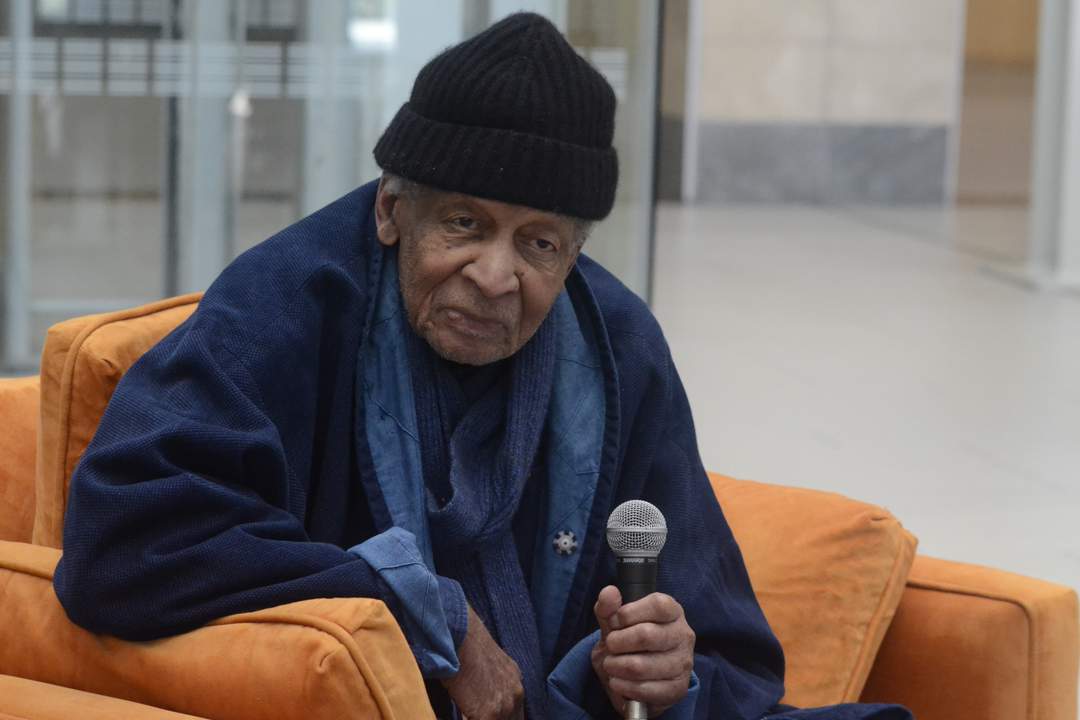
- South African pianist Abdullah Ibrahim has died. He was 91.
- Ibrahim died peacefully, surrounded by family, in Germany following a short illness, his family said in a statement on Monday.
- Over his seven-decade career, he became one of the country’s most influential and successful jazz musicians.
Throughout his career, South African pianist Abdullah Ibrahim reflected on what it means to be an artist. At 91, he felt like he had gotten closer to finding the answer.
“The blessing that we have is that we can showcase this little gift that we’ve been given… Continuously try to understand what it is that we are dealing with, because it’s a very special place to be,” Ibrahim said at a Cape Town press conference earlier this year, ahead of what would be his final performance in South Africa.
He explained that, in some traditions, those with a musical inclination were drafted into medicine.
“So, we are healers. We’re misplaced, so we try to do our best,” the jazz legend said.
Ibrahim, an internationally renowned musician and a pioneer of Cape jazz, has died at age 91.
He died peacefully, surrounded by family in Germany following a short illness, his family said in a statement on Monday.
Over his seven-decade career, he became one of the country’s most influential and successful jazz musicians. He leaves behind a monumental legacy and an indelible mark on SA culture.
His compositions, such as Mannenberg and Soweto, became anti-apartheid anthems, and he was praised by SA’s first democratically elected president, Nelson Mandela. Ibrahim was invited to perform at Mandela’s 1994 presidential inauguration. Madiba was asked about his impressions of Ibrahim at the time, replying, “Bach? Beethoven? We’ve got better.”
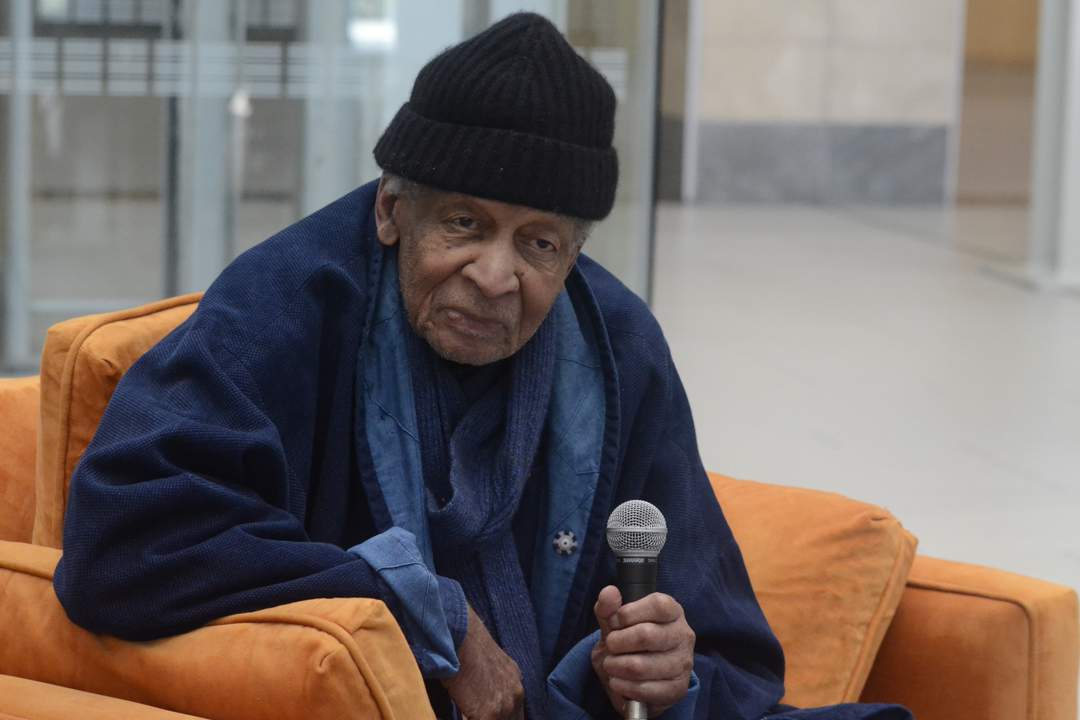
Abdullah Ibrahim
President Cyril Ramaphosa expressed his “profound sadness” at Ibrahim’s death. In a statement, Ramaphosa said: “Today our nation mourns the passing of an international icon and global citizen whose profound creations honoured the South Africa that shaped his political commitment and musical brilliance.
“As we commemorate the 50th anniversary of the youth uprising, the passing of Abdullah Ibrahim reminds us of the then-illegal benefit concert he organised in support of the liberation movement following the uprising, as a demonstration of his commitment to our struggle.
“We give thanks for the many decades of his life that he devoted to his personal passion, which he shared with humanity through his recordings and his appearances in clubs and concert halls throughout the globe.
“He has enriched our lives with his musical gifts and his involvement in making the world a better place.”
Ibrahim was conscious of his gift and, at the press conference, revealed that, almost seven decades later, he did not take it for granted – and that he was present each time he played.
“That’s why we play the music.”
“I play a concert with my band, and then after, the promoter asks us, ‘Can you give us a rundown of what you played?’ We can’t remember.”
“Thank God – we don’t want to remember,” he said at the time, to laughter from the audience.
Ibrahim, born Adolphus Brand, was raised in the mixed-race area of District Six. While attending Trafalgar High School, he began playing the piano at the age of 7 and made his professional debut at 15.
He was exposed to numerous music styles while growing up, including African Khoi-San songs, gospel tunes, Cape carnival/Klopse music, American jazz, township jive, Cape Malay music, and classical, according to his website biography.
In 1959 and 1960, the pianist was part of the highly influential Jazz Epistles, which also included Kippie Moeketsi, Jonas Gwangwa, Hugh Masekela, Johnny Gertze, and Makaya Ntshoko on drums.
The band became a target of the apartheid government after the Sharpeville massacre in 1960. Ibrahim left SA in 1962, going into exile, and lived in New York and Europe throughout the decade.
He married jazz singer Sathima Bea Benjamin in 1965. They shared two children. In 1963, Ibrahim met Duke Ellington in Zurich; the two began playing together, and they released the album Duke Ellington presents The Dollar Brand Trio.
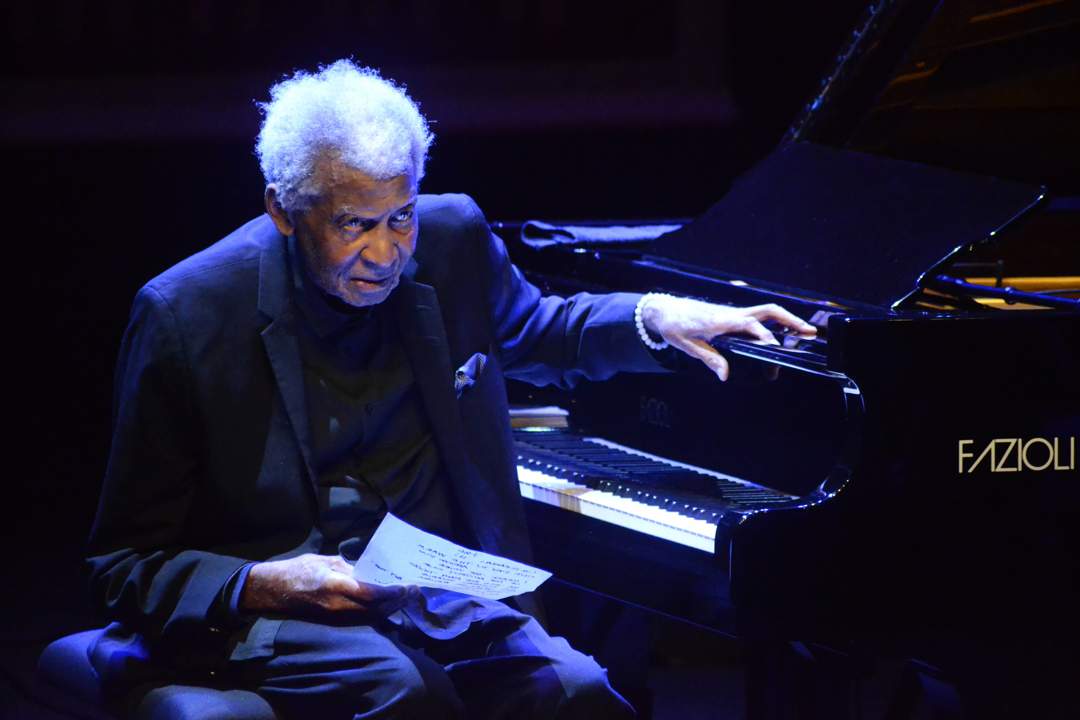
Abdullah Ibrahim performs at the Cape Town International Jazz Festival on 27 March 2026.
While in New York, Ibrahim interacted with musicians such as John Coltrane, Pharoah Sanders, Don Cherry, Ornette Coleman, and Cecil Taylor.
By the 1970s, he was still releasing his albums under Dollar Brand, even though he had changed his name and converted to Islam in 1968.
Ibrahim and his family temporarily returned to South Africa in 1973, where the pianist met Johannesburg record shop owner Rashid Vally in his Kohinoor Store, according to “Mannenberg”: Notes on the Making of an Icon and Anthem.
Vally became the musician’s producer and worked on albums such as Underground in Africa and Mannenberg Is Where It’s Happening. The latter album’s opening track, Mannenberg, was recorded in 1974 and features Robbie Jansen, Monty Weber, Morris Goldberg, and Basil Coetzee (who was forcibly removed from District Six to Manenberg).
The uplifting tune is perhaps an unlikely candidate for a song that became the soundtrack of resistance, as it was released at a time of forced removals of black and coloured communities in Cape Town.
In Johannesburg, Vally played Mannenberg Is Where It’s Happening at his record store ahead of its release, and a demand started for it. The record sold more copies in 1974 and 1975 than any other SA jazz album before.
READ | Mannenberg is still where it’s happening: A tribute to 50 years of Abdullah Ibrahim’s iconic anthem
Jansen and Coetzee played a key role in making Mannenberg an anti-apartheid anthem; it became overtly political after being played at rallies and demonstrations.
Other popular albums Ibrahim released during his career included African Marketplace, Water from an Ancient Well, and African Herbs. His accolades include the Order of Ikhamanga (Silver) and being a recipient of the NEA Jazz Masters Fellowships.
At the conference, there was great interest in discussing past milestones, but Ibrahim – emboldened by wisdom and old age – did not mince his words in expressing his disinterest. Rather, he was concerned with helping his audience understand the need for introspection.
“We need some deep, deep reflection of what it is that we represent, what it is that we want to represent, and what our trajectory is.”
Music for him, he later explained, was never just about the notes; it was a science concerned with “sound and time”.
Ibrahim was also a student of Japanese martial arts and held a black belt in karate. He developed a deep relationship with Japan and its culture, receiving the 2020 Spring Imperial Decoration from the Japanese government.
In his final years, he was based in Germany and continued to perform and record music. He made an appearance on Tiny Desk (Home) Concert in 2022 and returned to South Africa in 2024, where he played in Cape Town and Pretoria.
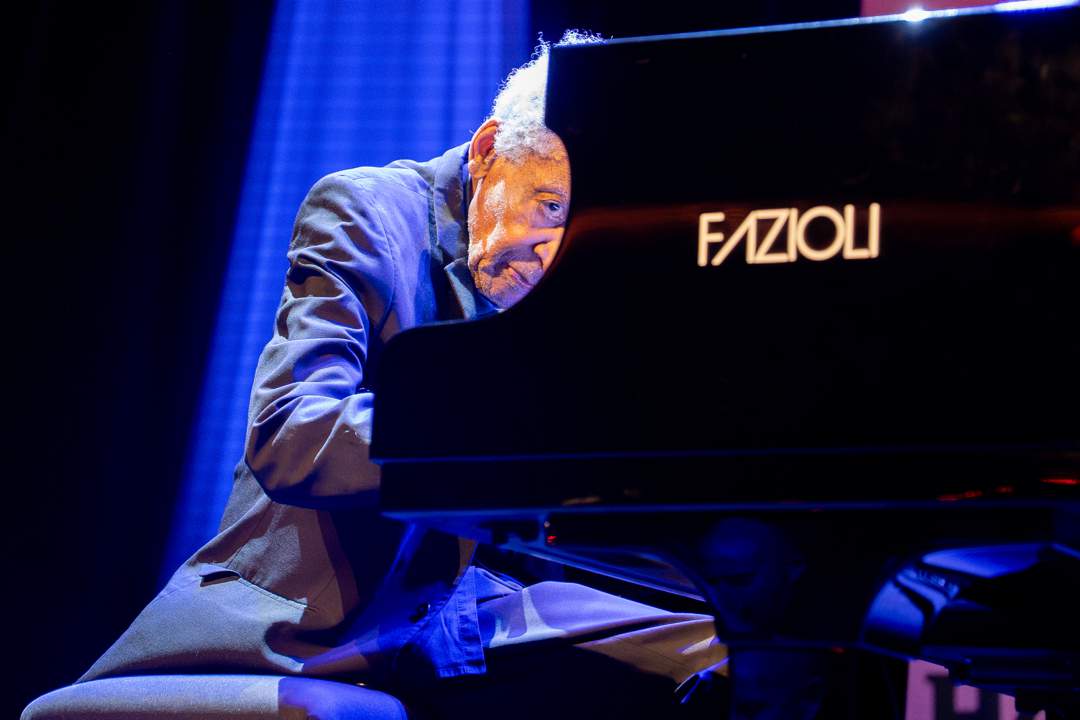
Abdullah Ibrahim performs at the Cape Town International Jazz Festival on 27 March 2026.
Ibrahim had his final performance on home soil in March 2026 at the Cape Town International Jazz Festival.
During his much-anticipated show at CTIJF, the room was completely silent for almost the entire performance. He played two long pieces and received a standing ovation for each. The same frail fingers that were fidgeting with a tissue the previous day were dextrously gliding across the keys. With his sparse meditations, Ibrahim played as if he were alone in the auditorium, completely focused on the present moment.
During the press conference ahead of his local concert, he said: “The only thing that I have is breath, to say thank you, thank you, thank you…”
He saw no need to toot his own horn, even though he had every right to do so. Instead, he looked to share an important lesson and philosophy: the importance of living in the now.
When asked to reflect on the legacy of some of his iconic compositions from the 1970s, Ibrahim was uninterested in discussing his past works, adding, “What shall we reflect on about the past? There is no past. There is no future. There is only now.”
READ | ‘There is only now’: SA jazz legend Abdullah Ibrahim stays in the present
‘ The preceding article may include information circulated by third parties ’
‘ Some details of this article were extracted from the following source www.news24.com ’