Peter Hujar’s photographs are haunting, glamorous, gorgeously grotesque, emotionally devastating and above all, honest.
Now, Bay Area audiences have a unique opportunity to immerse themselves in the world of this under-sung master of 20th century photography.
With “Peter Hujar: The Gracie Mansion Show Revisited,” the Fraenkel Gallery in San Francisco is recreating a now-legendary 1986 show in New York’s East Village presented by gallerist Gracie Mansion. The 70 photographs include portraits of friends, artists and dogs; nudes; landscapes; scenes of decaying abandoned buildings; and images of animals, living and dead.
“What became obvious to me, living with this show, was that everything was a portrait,” Mansion said in a discussion about the work for Fraenkel Gallery, highlighting how Hujar brought that point of view even to inanimate objects and scenes.
The Fraenkel presentation reproduces the original exhibition layout and even includes some prints from the 1986 show.
Hujar died a year after that exhibition, on Nov. 26, 1987, of complications from the AIDS virus that was devastating the queer and artistic communities. He was 53 years old.
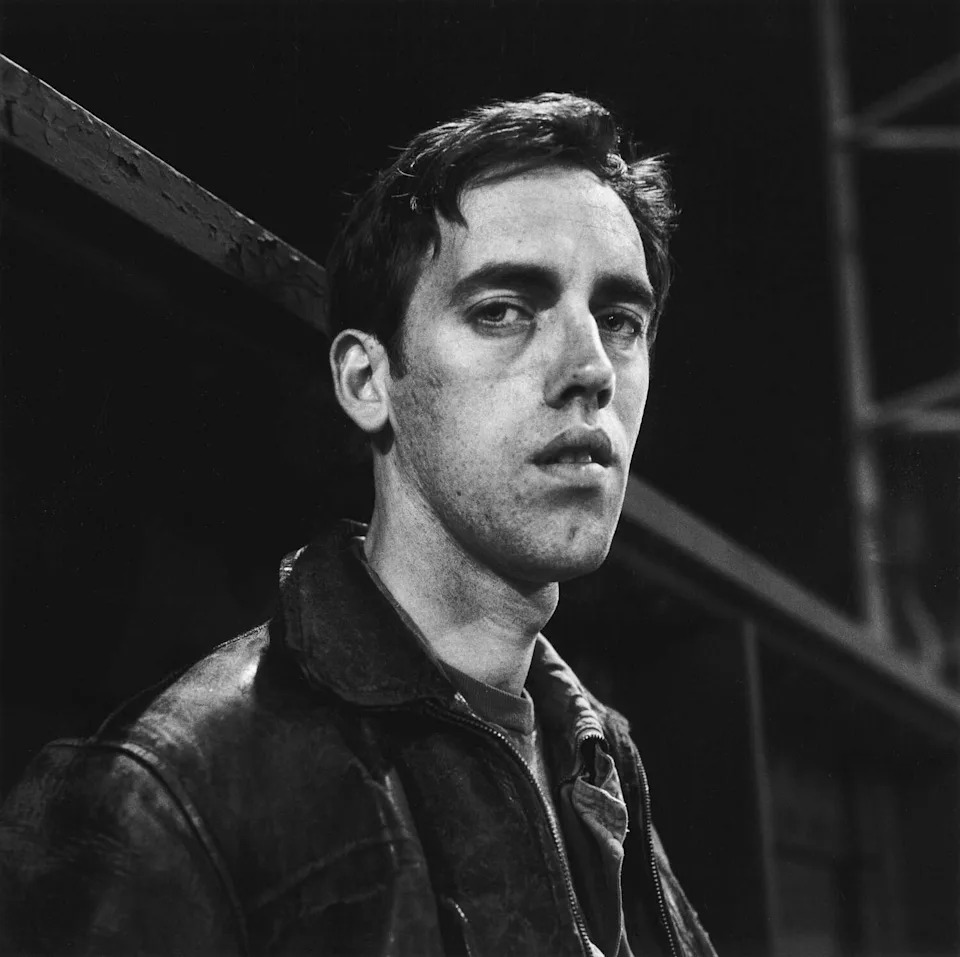
“David Wojnarowicz: Manhattan-Night (III)” (1985) by Peter Hujar. (Peter Hujar Archive, Artists Rights Society, N.Y.)
In a perfect bit of synchronicity, on Friday-Saturday, Oct. 10-11, the Mill Valley Film Festival is screening the new film “Peter Hujar’s Day” written and directed by Ira Sachs. It stars Ben Whishaw as the photographer and Rebecca Hall as writer Linda Rosenkranz, Hujar’s oldest friend.
More Information
“Peter Hujar: The Gracie Mansion Show Revisited”: Photography. 10:30 a.m.-5:30 p.m. Tuesday-Friday; 11 a.m.-5 p.m. Saturday. Through Oct. 25. Fraenkel Gallery, 49 Geary St., S.F. 415-981-2661. www.fraenkelgallery.com.
Mill Valley Film Festival presents “Peter Hujar’s Day”: 8 p.m. Friday, Oct. 10. Smith Rafael Film Center, 1118 Fourth St., San Rafael. 5 p.m. Saturday, Oct. 11. Berkeley Art Museum Pacific Film Archive, 2155 Center St., Berkeley. www.mvff.com
The film is based on Rosenkranz’s book of the same name, in which she interviewed Hujar solely about what he had done the previous day, Dec. 18, 1974. In the course of the film, Hujar recounts both the extraordinary and the mundane, from photographing poet Allen Ginsberg to daydreaming about the man ahead of him in line at a Chinese restaurant.
When I met Hujar’s friend and executor Stephen Koch at the Fraenkel Gallery show opening, he said that Whishaw absolutely captured Hujar’s voice in his performance. Watching the movie, one has the sense that the actor was both channeling the real Hujar and also giving such an idiosyncratic, specific performance with each gesture that he was creating something as artistically original as the photographer’s own work. You get the same feeling from the film – Hujar’s great, candid gossip, asides and his recall of details – as you do the book.
Although Hujar has come to be acknowledged in recent years as one of the masters of black-and-white photography and portraiture, he’s still not as well known outside the art world as his peer and fellow gay portrait photographer Robert Mapplethorpe. While the two are often linked and compared because of the revolutionary homoeroticism of their work, it’s a vast oversimplification of both artists: Mapplethorpe was more interested in forms and archetypes in his depictions of the body, while Hujar found beauty in the particular of each face.

“Greer Lankton in a Fashion Pose” (1983) by Peter Hujar. (Peter Hujar Archive, Artists Rights Society, N.Y.)
Hujar was born on Oct. 11, 1934, in Trenton, N.J., to Rose Murphy and raised by his Ukrainian grandparents before moving to New York City in 1946 to live in an abusive home with his mother and her second husband. At 16, he began to live independently and later entered the School of Industrial Art where he started apprenticing with commercial photographers.
In 1963, he earned a Fulbright scholarship and traveled to Italy with his boyfriend, artist Paul Thek, and photographed the Capuchin Catacombs of Palermo. Those images were later featured in “Portraits in Life and Death,” the 1976 book that also included photographs of creatives such as Thek, writers Fran Lebowitz, Susan Sontag, William S. Burroughs, filmmaker John Waters and drag star Divine.
The work on view at Fraenkel Gallery through Oct. 25 feels as intimate as “Peter Hujar’s Day” book and film, with the curation mixing images of life and death. “David Wojnarowicz: Manhattan-Night (III)” (1985) shows the artist who was also Hujar’s lover and friend in close up, his full lips sensual, every freckle on his face realized. Hujar’s portrait of his acquaintance Bob Berg (1985) shows his mastery of lighting and shadow, a skill likely honed in a 1967 master class he took with photographers Richard Avedon and Marvin Israel. I’m obsessed with the definition of Berg’s curls in the photo and the single light catching hair across his forehead.

“Bob Berg” (1985) by Peter Hujar. (Peter Hujar Archive, Artists Rights Society, N.Y.)
Hujar’s portrait of famed Vogue editor-in-chief Diana Vreeland (1975) has a softness to it one might not usually associate with the ferocious fashion personality, while “Greer Lankton in a Fashion Pose” (1983) shows the New York artist reclining, hair cascading behind her as if in a George Hurrell 1930s movie-star portrait.
But it is the deterioration shown in the abandoned rooms and buildings as well as dead animal photos that give the work bite. There’s a sense of inevitable finality in many of these photos, particularly “Jackie Curtis Is Dead” (1985), which shows the Warhol star laid out in an open casket.
These works, and the new film, are poignant reminders that Hujar was an artist taken too soon.
This article originally published at Underrated master photographer Peter Hujar gets his due in S.F. show and new film.
‘ The preceding article may include information circulated by third parties ’
‘ Some details of this article were extracted from the following source www.yahoo.com ’