Artificial intelligence’s relevance for music is about much more than just AI-generated music, even if the latter continues to dominate media coverage.
AI’s use for creating personalised music playlists based on individual listeners’ tastes and habits has a long history already, and the big streaming services are continuing to develop new spins on the idea.
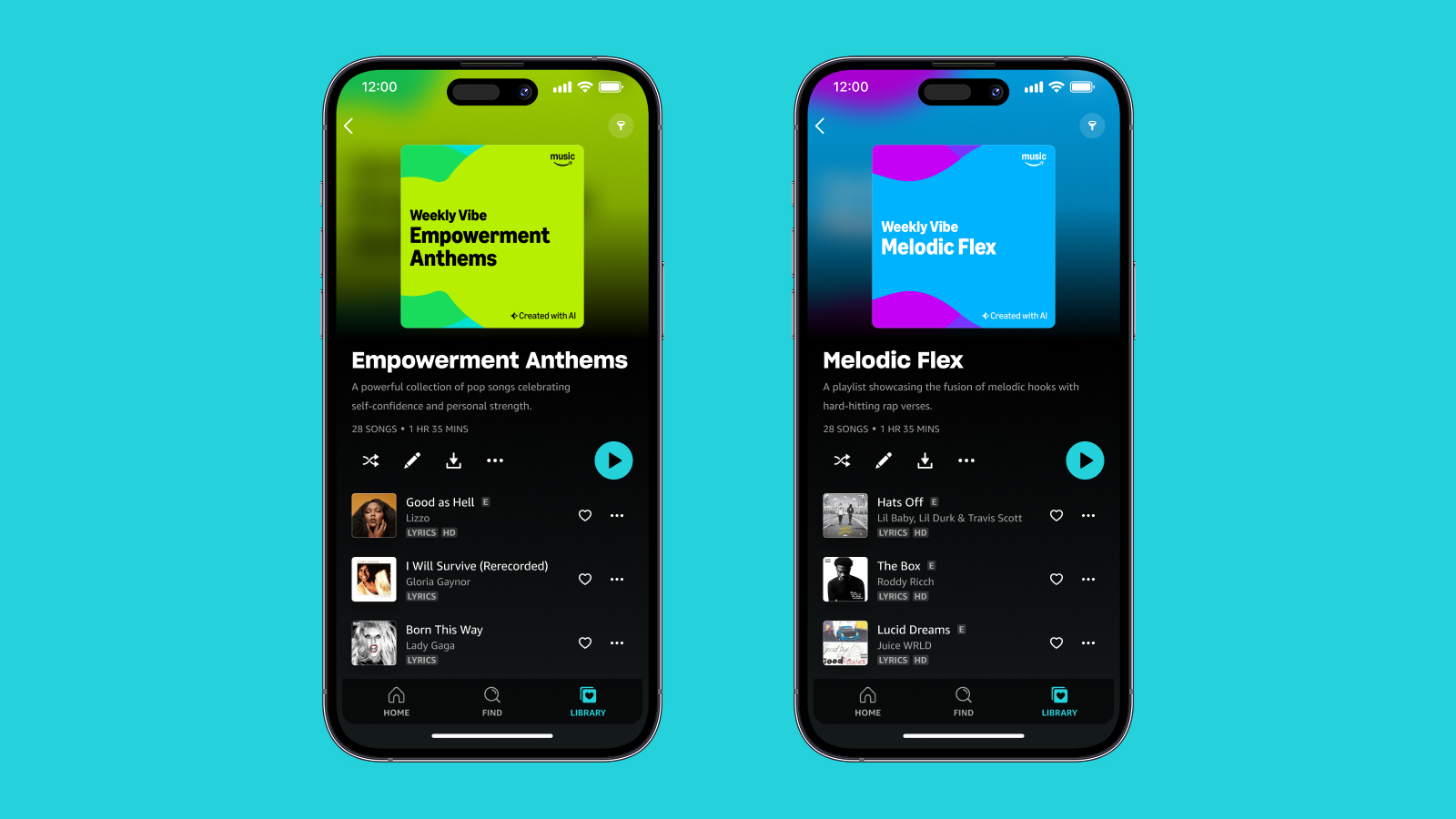
One of those new spins has launched today: a playlist called ‘Weekly Vibe’ on Amazon Music. Updated every Monday, it offers a mixture of existing favourites and new tracks, based on the listener’s preferences.
Each update is themed: examples in Amazon Music’s promo imagery include ‘Empowerment Anthems’, ‘Melodic Flex’ (a “fusion of melodic hooks with hard-hitting rap verses”); ‘Y2K Revival’ (early 2000s tracks) and ‘Campfire Crooners’ for example.
“The feature represents another way we’re harnessing AI to help fans connect with more music that resonates with them – creating personalised playlists celebrating their favorite artists while introducing new music that matches their unique tastes,” said Amazon Music GM Ryan Redington.
Amazon Music used its parent company’s Bedrock platform for the new playlist. It follows on from previous AI announcements from the service: an AI playlist-making tool called Maestro in April 2024 and an AI-powered music search feature in May this year.
For now, ‘Weekly Vibe’ is only rolling out in the US. Listeners will be able to share their versions using social media, and save them to their libraries before each Monday update if they want to hang on to a particular week’s selection.
As we said, personalised playlists are a common feature across the big streaming services. Spotify started this ball rolling with ‘Discover Weekly’ in 2015, and has since grown its stable of personalised playlists under the tag of ‘Made For You’.
Apple Music has its own ‘Stations for You’ category, YouTube Music has its ‘Ask Music’ personalised radio, and everyone has playlists personalised with new releases, familiar favourites and/or tracks the algorithm thinks a listener would like, in various forms.
‘ The preceding article may include information circulated by third parties ’
‘ Some details of this article were extracted from the following source musically.com ’