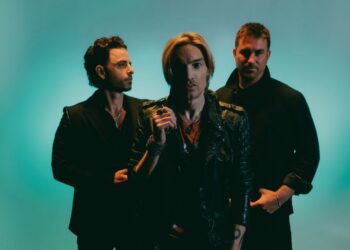
The Catalyst Quartet, formed in 2010 by the Sphinx Organization, serves as a catalyst for a more inclusive and inviting classical music experience. A core part of their mission is expanding the concert repertoire and restoring voices that have been silenced over the years. In 2018, the Catalyst Quartet launched their “Uncovered” recording series to spotlight the string quartets of Black composers, starting with Samuel Coleridge-Taylor and Florence Price. The third volume, devoted to American composers Coleridge-Taylor Perkinson, William Grant Still and George Walker, was nominated for a 2024 Grammy award, but their most recent release is even more ambitious.
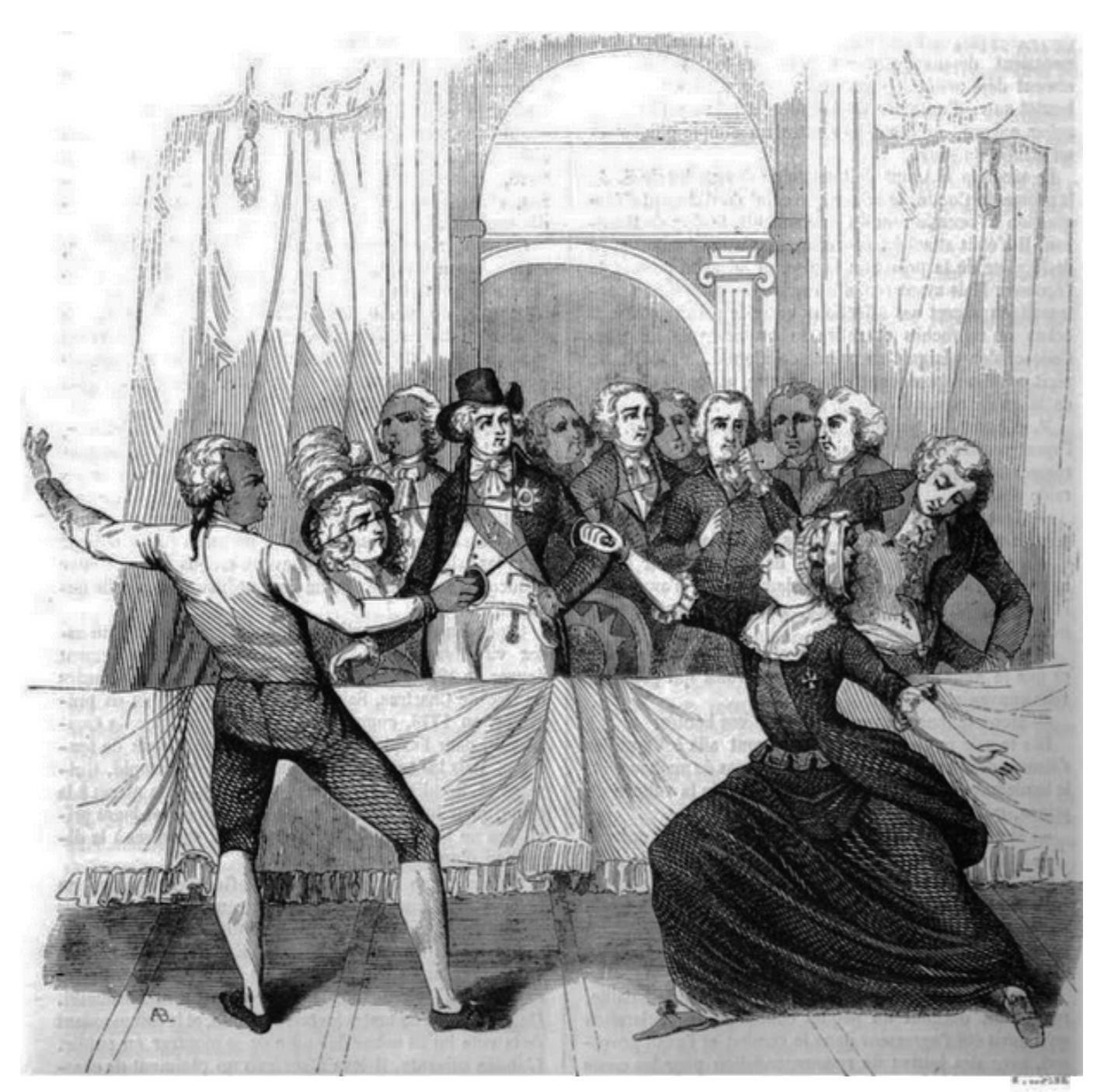
The fourth volume in the “Uncovered” series presents the complete string quartets of Joseph Bologne, the Chevalier de Saint-Georges, possibly the most remarkable French musician of the late eighteenth century. His story was told in the 2022 film “Chevalier,” but even that barely scratched the surface of his accomplishments. Born on the Caribbean island of Guadeloupe in 1754, he was the son of a French plantation owner and an enslaved woman. His father, Georges Bologne de Saint-Georges, raised Joseph as his own and even sent him off to Paris for his education. There, Joseph initially excelled as a swordsman, winning a series of fencing competitions as a teenager that earned him a knighthood from King Louis XV.
Understanding Wisconsin, Together.
WPR’s “Wisconsin Today” newsletter keeps you connected to the state you love without feeling overwhelmed. No paywall. No agenda. No corporate filter.
Already a celebrity in Paris, the newly minted Chevalier de Saint-Georges embarked on a second career as a violinist, and within just a few years, he was having concertos written for him by composers like Antonio Lotti and François-Joseph Gossec. Gossec went on to become an important early mentor, inviting Saint-Georges to join and eventually conduct his orchestra, the Concert des Amateurs. In 1778, a visiting Wolfgang Amadeus Mozart stayed for a couple of months in the same apartments as the Chevalier, and it’s fascinating to speculate what conversations they would have had.
He certainly would have had some advice to give Mozart about appealing to Parisian tastes: Saint-Georges was already an accomplished composer in his own right by that time, as this new album from the Catalyst Quartet shows. Most of Saint-Georges’s early works were for his own instrument, including more than a dozen violin concertos and almost as many symphonies concertantes. But he also wrote some of the very first string quartets of any French composer — eighteen of them, so far as we know, including his very first and very last published works.
The string quartet was a little different in eighteenth-century Paris, compared to Italy or Vienna. Instead of focusing on the first violin, the French-style “concertante” quartets gave all four performers something interesting to do. On the other hand, they were also very short, typically with only two movements, and seemed designed to leave the audience wanting more. But even such a small canvas still left room for drama, as the opening from the third quartet in Saint-Georges’s Opus 1 set shows:
On the other hand, the finales of these concertante quartets don’t always feel very final. There were no established forms for these second movements to follow, and Saint-Georges took the opportunity to experiment, giving us round dances, minuets or, in a few cases, even an aria with variations, as in the last movement of his sixth Concertante Quartet from 1779:
By this point in his career, the Chevalier was increasingly being drawn to the world of opera. Saint-Georges wrote at least six operas that we know about, with the most successful being “L’amant anonyme” (“The Anonymous Lover”) from 1780. But it was also in the opera house that the Chevalier encountered the most overt racism of his career, with singers refusing to work with him and even petitioning the queen to remove him. (That queen, Marie Antoinette, responded by inviting Saint-George to give private concerts at her palace instead.) He may have been seeking an extra source of income or just a familiar place of refuge when he wrote one last set of string quartets in 1785. These works, his Opus 14, show Saint-Georges assimilating the style of Joseph Haydn, whose “Paris Symphonies” he had recently premiered:
All eighteen quartets receive brilliant and detailed performances from the Catalyst Quartet, allowing the interplay of the four instruments to shine through. They’re also accompanied by excellent notes from UC San Diego Associate Professor M. Myrta Leslie Santana. “Uncovered Vol. 4” is out now as a digital album on the Azica label and is available wherever music is streamed or downloaded.
‘ The preceding article may include information circulated by third parties ’
‘ Some details of this article were extracted from the following source www.wpr.org ’