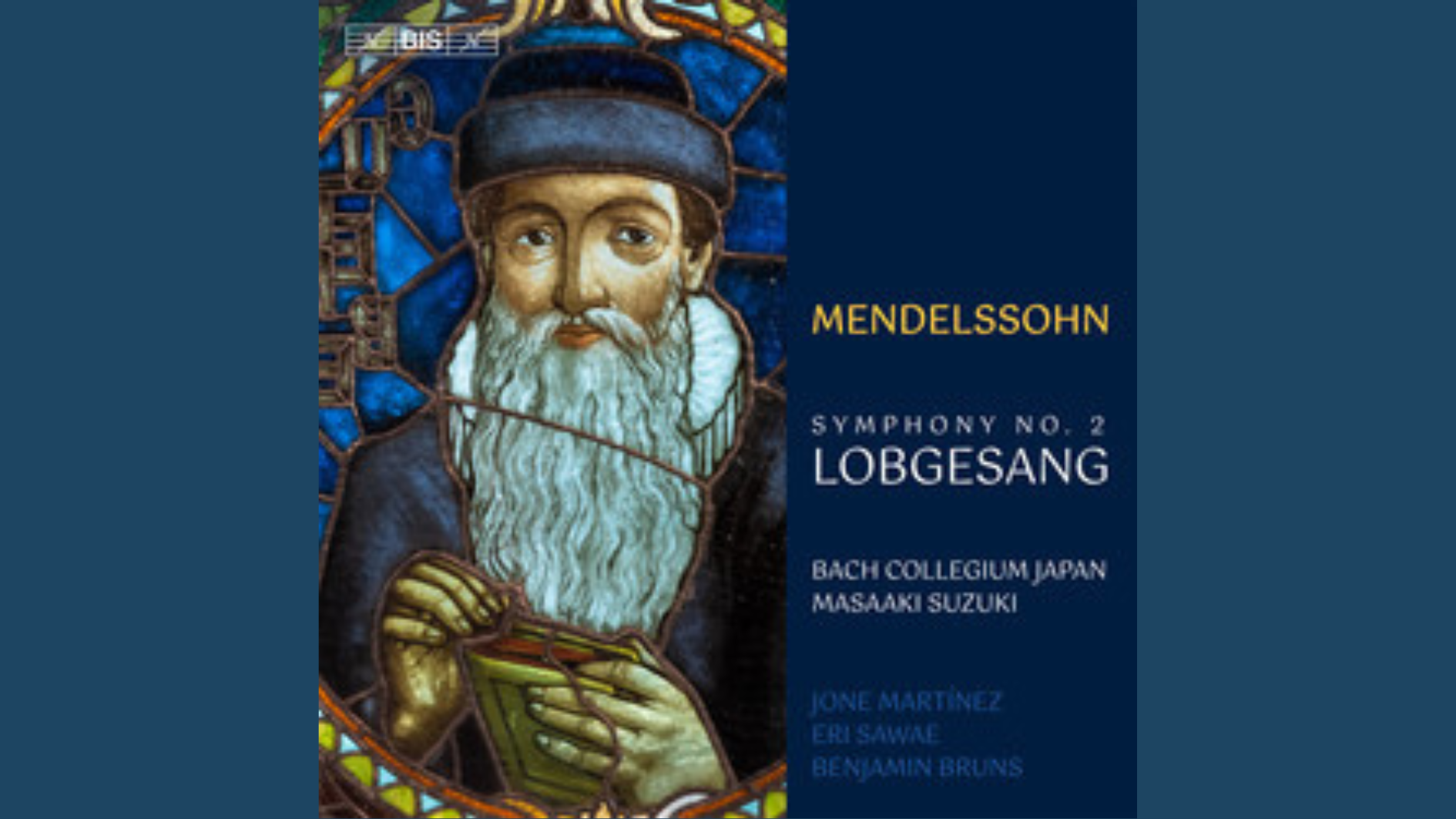
Just in time for Passover and Easter, this week’s new release is the “Lobgesang,” or “Hymn of Praise,” something of a symphony-cantata by Felix Mendelssohn.
It’s also known as the Symphony No. 2 in B-Flat Major, Op. 52. The Bach Collegium Japan recorded the work under the direction of founder Masaaki Suzuki on the BIS label.
The music starts with a three-movement symphony that serves as an orchestral prelude for the sacred cantata that follows. The cantata’s nine movements are comprised of texts primarily drawn from the Bible — mostly Psalms and Isaiah in the Old Testament, with excerpts from the New Testament as well.
Understanding Wisconsin, Together.
WPR’s “Wisconsin Today” newsletter keeps you connected to the state you love without feeling overwhelmed. No paywall. No agenda. No corporate filter.
This substantial work (70+ minutes) was composed not too long after Beethoven’s choral Symphony No. 9 premiered, a piece that clearly inspired Mendelssohn.
A big celebration provided the impetus for the music — the 400th anniversary of the invention of the printing press and its first major publication, the Gutenberg Bible. Mendelssohn was commissioned to compose something for the event, and his creation serves as an allegory that takes the listener on a spiritual journey from darkness into light.
The texts reflect both the events of Exodus that are celebrated during the Jewish Passover, and themes of the week leading up to Easter and the day itself — sorrow, wandering in the darkness and fear, followed by liberation, God’s protection, redemption, praise and sheer joy. The cantata section opens and closes with “Let everything that has breath praise the Lord” from Psalm 150:
Mendelssohn created a rich soundscape for “Lobgesang,” with an organ joining the orchestra, plus a chorus and three soloists (two sopranos and a tenor).
He also included the popular Lutheran chorale, “Nun Danket alle Gott,” (Now Praise We all our God) that would have been well known to audiences of the day:
This new recording from the Bach Collegium Japan is a modest-sized endeavor for such a big piece, and the ensemble uses period instruments and gut strings, with just over 20 singers in the chorus. The result is clear and transparent, yet with plenty of power.
This is the third movement from the opening symphony:
Mendelssohn’s heritage was Jewish — he was born into a prominent German-Jewish family, but due to 19th century anti-Semitism, he was baptized as a Lutheran at age 7, given a Christian education and made to assimilate.
Felix Mendelssohn did “… eventually find a way to balance his Jewish heritage and his Christian faith,” according to scholar Jeffrey S. Sposato, whose book “The Price of Assimilation: Felix Mendelssohn and the Nineteenth-Century Anti-Semitic Tradition” informed a 2009 BBC documentary about Mendelssohn.
Whether that balance was intentionally reflected in his “Lobgesang” or not, the music and text are all about illumination and the ultimate victory of light over darkness.
‘ The preceding article may include information circulated by third parties ’
‘ Some details of this article were extracted from the following source www.wpr.org ’