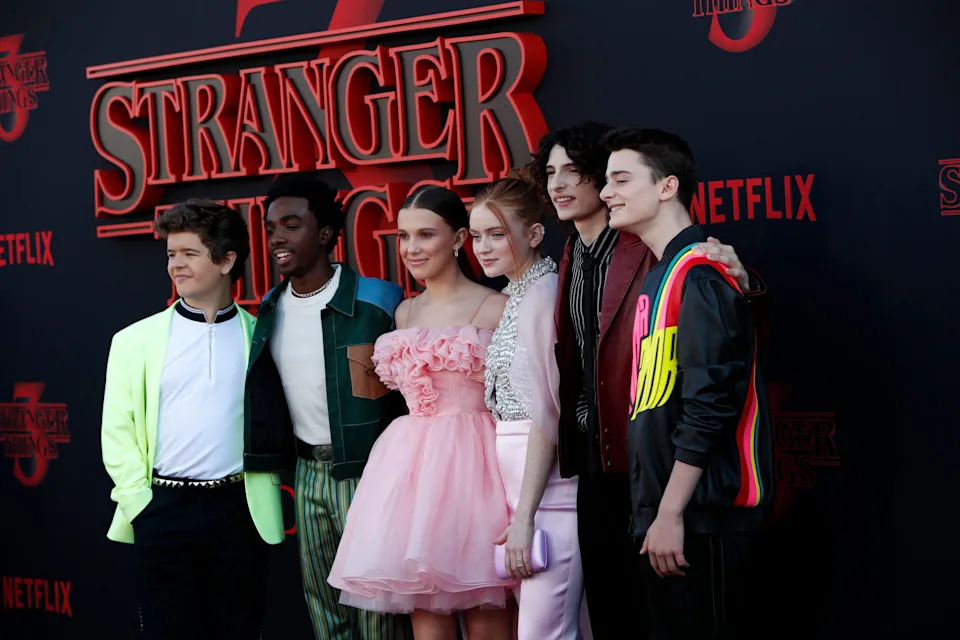
When Stranger Things premiered, its young cast felt like lightning in a bottle — talented, awkward, and impossibly charming in a way Hollywood rarely captures. Nearly a decade later, those kids have grown into adults navigating fame, activism, high fashion, Broadway, music careers, and very public identity shifts. What makes their evolution so fascinating is that it didn’t follow a single, polished child-star template. Instead, it splintered into wildly different paths that reflect how strange it actually is to grow up in front of the internet.
1. Millie Bobby Brown Became a Business Mogul — and a Mom — Before 21

Shutterstock
Millie Bobby Brown didn’t just transition into adult roles — she built an entire brand ecosystem while still a teenager. Her beauty company, Florence by Mills, expanded globally, making her one of the youngest self-made millionaires in entertainment. She’s also produced multiple projects, quietly shifting from child actor to executive voice at an age when most former child stars are still figuring out their footing. That level of control and foresight is rare in Hollywood, especially so early.
Offscreen, Brown’s life has evolved just as dramatically. She married Jake Bongiovi in a low-key but widely celebrated ceremony, signaling a shift toward stability rather than spectacle. The couple also adopted a baby girl, a move that surprised fans and underscored Brown’s determination to build a grounded life outside the industry machine. She’s spoken openly about protecting her mental health, setting boundaries with fame, and choosing adulthood on her own terms — not the internet’s.
2. Finn Wolfhard Is More Indie Artist Than Teen Heartthrob

Shutterstock
Finn Wolfhard actively resisted being boxed into the “former child star” narrative. He’s pursued music, indie films, directing, and offbeat projects that deliberately sidestep mainstream expectations. His band and film choices often skew toward the experimental rather than the commercial. That’s a bold move in an industry that loves predictability.
Wolfhard has spoken about discomfort with early fame and how quickly audiences projected adulthood onto him. Rather than leaning into that attention, he retreated creatively. His career path reflects a desire for autonomy over visibility. It’s a quieter, more intentional version of post-child stardom.
3. Sadie Sink Became a Serious Stage Actor

Shutterstock
Sadie Sink didn’t just level up onscreen — she went straight to Broadway. Her performances on stage earned critical praise and cemented her reputation as a serious dramatic actor. Theater insiders note that stage work demands discipline and emotional stamina that most former child stars avoid. Sink embraced it.
She’s also been selective about film roles, choosing projects with emotional complexity over commercial safety. Critics often cite her performances as grounded and emotionally mature. Sink’s trajectory suggests longevity rather than hype. She’s building a résumé designed to last decades, not trends.
4. Caleb McLaughlin Has Been Vocal About Hollywood’s Racial Bias

Shutterstock
Caleb McLaughlin has used his platform to speak openly about colorism and unequal treatment within fandom culture. He’s addressed how his *Stranger Things* success didn’t shield him from racism, even within the show’s audience. Those conversations sparked difficult but necessary discourse online. Few young actors confront this head-on.
Rather than retreating, McLaughlin leaned into advocacy and self-definition. He’s emphasized choosing roles that reflect depth rather than stereotypes. His interviews often feel more sociological than promotional. That honesty has reshaped how many fans see him — not just as Lucas, but as a cultural commentator.
5. Gaten Matarazzo Turned Advocacy Into Action

Shutterstock
Gaten Matarazzo didn’t just raise awareness about cleidocranial dysplasia — he actively changed conversations around disability. By speaking publicly about his condition, he normalized “difference” for millions of viewers. He’s worked with medical organizations to fundraise and educate. That kind of visibility has real-world impact.
Matarazzo has also continued performing across television, theater, and hosting. His ability to balance advocacy with entertainment has earned respect across industries. Rather than being defined by his condition, he reframed it as part of a broader identity. That reframing matters, especially for young fans watching.
6. Noah Schnapp Publicly Came Out and Reframed His Narrative

iStock
Noah Schnapp’s decision to come out publicly marked a turning point in how fans interpreted both him and his character. The announcement was casual, self-assured, and refreshingly un-dramatic. It resonated deeply with LGBTQ+ fans who grew up alongside him. Visibility mattered, but so did tone.
Schnapp has spoken about the relief of aligning his personal truth with public perception. He’s since been more vocal about authenticity and self-acceptance. Industry observers note how much power honesty carries in an image-driven business. His coming out wasn’t a career risk — it was a reset.
7. The Cast Is Deeply Split Between Hollywood and Normal Life

Shutterstock
Some *Stranger Things* kids doubled down on fame, while others stepped back significantly. Several have enrolled in college, pursued low-key creative projects, or taken extended breaks. That divergence reflects a generational shift away from nonstop visibility. Fame is no longer the default goal.
Psychologists who study child stardom note that agency matters more than success. The cast’s varied choices suggest strong support systems behind the scenes. Rather than chasing identical paths, they’ve prioritized sustainability. That may be the healthiest outcome of all.
8. Fashion Houses Now Court Them as Cultural Barometers

Shutterstock
Multiple cast members are now fixtures at global fashion weeks. Designers see them as cultural translators between Gen Z and luxury markets. Their red-carpet appearances often generate more buzz than those of traditional models. Style has become another language of influence.
What’s notable is how personal their fashion choices feel. Rather than fitting a single aesthetic, each cast member projects a distinct identity. Fashion editors often describe them as “taste-makers, not mannequins.” That authenticity is exactly what brands crave right now.
9. Social Media Fame Has Been a Double-Edged Sword

iStock
The cast grew up during the rise of TikTok, Instagram, and algorithmic fandom. Every misstep, haircut, or relationship became content. Several actors have spoken about the emotional toll of constant surveillance. Growing up publicly leaves no room for private mistakes.
As a result, many have deliberately limited their online presence. Some post sporadically, others hand accounts to teams. That withdrawal signals a shift in how young celebrities value privacy. Visibility, once currency, now comes with cost.
10. Their Adult Roles Are Intentionally Un-“Stranger Things.”

Shutterstock
Most cast members have avoided projects that echo the show’s tone or genre. They’ve pursued horror, indie drama, theater, comedy, and experimental work instead. That diversification feels strategic rather than accidental. Nobody wants to live inside nostalgia forever.
Casting directors often praise their willingness to disappear into roles. That’s not easy when your face is globally recognizable. The effort signals long-term thinking. Reinvention, not replication, defines their next chapter.
11. They’re Navigating Fame Without a Playbook

iStock
There’s no clear precedent for growing up inside a streaming-era phenomenon. Traditional child-star models don’t fully apply. Their fame was global, instantaneous, and algorithmically amplified. That changes everything.
Without a roadmap, the cast is publicly improvising adulthood. Mistakes happen, learning curves are visible, and growth is uneven. That messiness makes their journeys feel more human than polished. It’s fame in real time, without edits.
12. Mental Health Conversations Are Central, Not Optional

Shutterstock
Several cast members have openly discussed anxiety, burnout, and pressure. Mental health isn’t treated as a scandal — it’s framed as maintenance. That shift reflects broader generational attitudes toward wellness. Silence is no longer the norm.
Industry insiders note how unusual this openness still is. By normalizing support, the cast sets a new standard. Their honesty helps destigmatize vulnerability in entertainment. That influence extends far beyond the show.
13. Winona Ryder Became One of Hollywood’s Most Respected Second Acts

Shutterstock
She may not have been a kid in the show, but Winona Ryder is well worth a mention. Before Stranger Things, Ryder was often discussed in the past tense — a ’90s icon whose career had been derailed by tabloid scrutiny and industry indifference. The role of Joyce Byers didn’t just reintroduce her to a new generation; it reframed her entirely. She became the emotional anchor of the show, grounding its supernatural chaos in raw maternal fear and resilience. Critics widely credited her performance with restoring dramatic weight to genre television.
More importantly, Stranger Things repaired Ryder’s relationship with Hollywood itself. She went from being a cautionary tale to a case study in long-term talent and endurance. The role opened doors to new film projects, fashion partnerships, and public reappraisal that treated her with seriousness rather than nostalgia. For many viewers, Ryder’s return wasn’t just a comeback — it was a quiet correction of how unfairly her career had once been written off.
‘ The preceding article may include information circulated by third parties ’
‘ Some details of this article were extracted from the following source www.yahoo.com ’