Capturing the essence of artistic genius onscreen welcomes hyperbole. Usually, in films about painters or musicians, a secondary character will simply proclaim: “So-and-so, you have changed culture as we know it!” “You’ve broken the mold!” or some other breathlessness a screenwriter uses to announce talent without actually explaining how that talent is employed or why that talent matters. The creation of art as a cinematic topic is tough to capture. What is essential, allowing an idea to marinate in the juices of the mind, isn’t exactly thrilling viewing.
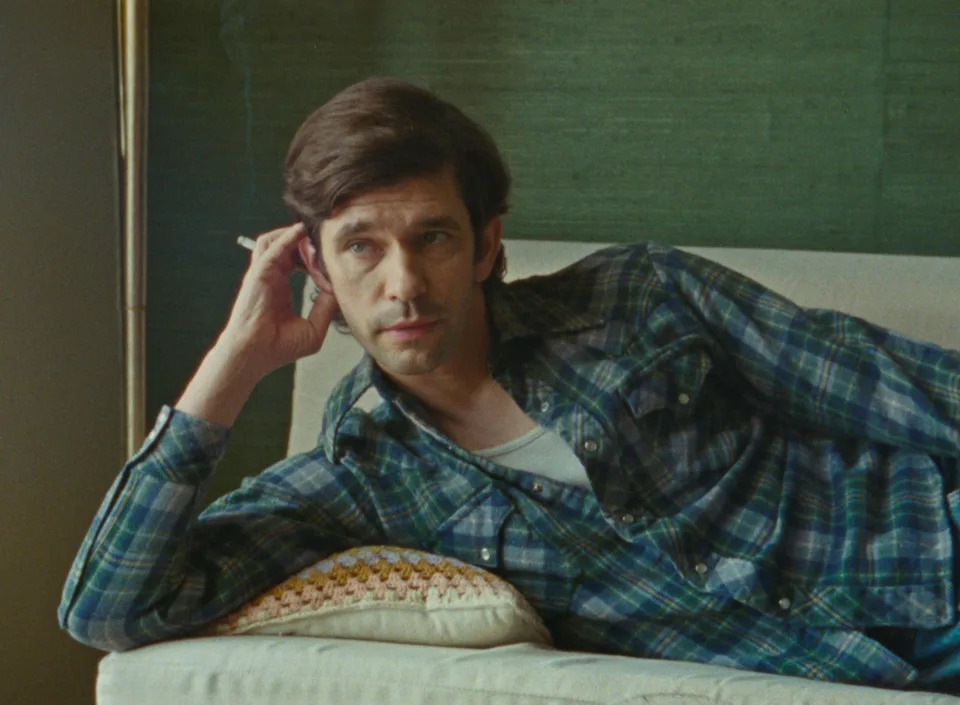
While watching “Peter Hujar’s Day,” the viewer is allowed to think about process. The Ira Sachs film is quite literally the dramatization of a conversation between the titular character (Ben Whishaw) and interviewer Linda Rosenkrantz (Rebacca Hall) from way back in the mid-70s. Hujar recounts the previous day: what he did, what he ate (and didn’t eat) and the fantasies that played out in his mind. Sounds simple and potentially boring; the audience doesn’t even see Hujar’s work at any point in the film. His perceived genius is not shown or explained, it seems.
Ben Whishaw stars in director Ira Sachs’ “Peter Hujar’s Day.”
But there’s Whishaw, a fine actor you will recognize from the most recent batch of Bond films in addition to artier fare. We learn much about Hujar — someone I knew nothing about going in — through Wishaw’s facial expressions and body movement. He seems aware of being watched by Rosenkratz. He sees himself much like he sees the subject of his photography. Someone a bit uncomfortable but in need of another person’s gaze. By only talking about his work for a portion of the conversation, we learn more about his perception of the world around him. What he observes and how he observes. This is an intense piece of introspection.

Rebecca Hall stars in director Ira Sachs’ “Peter Hujar’s Day.”
Even clocking at under 80 minutes, “Peter Hujar’s Day” moves at a deliberate pace, making the audience work in watching this portrait of an artist and listening to hints of the creative gears grinding through the line readings. Although I do not want to leave out Hall in my praise. She is also a great performer with a tougher job of observing matters. It’s a true actors’ showcase.
My appreciation for this film made me think about watching another artistic depiction from a few weeks back and what an altogether different viewing experience it was. One that is more outward and showier but one I loved all the same. “Springsteen: Deliver Me From Nowhere” was met with critical shrugs and a dismissive audience. It is the portrait of an artistic genius whom you no doubt know. But Scott Cooper’s portrait wants to look at the process of making art itself; namely the creation of the masterful “Nebraska” album and the personal challenges Springsteen tackled by lining them through his lyrics and the haunting notes that accompanied them.
While not a traditional biopic going from cradle to grave, “Nowhere” has the traditional elements of defining a tortured artist. A troubled childhood, ambivalence to fame, and fractured personal relationships are some of the defining notes of the story. In between, we see what inspires Springsteen (as played wonderfully by Jeremy Allen White) to come up with his songs and their themes. Perhaps what I enjoyed the most is how much comes from watching other movies. It should be no surprise to a Springsteen fan that Terrence Malick’s “Badlands” had an impact. Watching the tale of doomed lovers kill as they crisscross the heartland evokes the darkness of small town life engulfing the Boss’s work. Or the fact that Springsteen connects with a moment of seeing “The Night of the Hunter” at a young age. A classic, haunting film about evil’s insidious impact on childhood and how little ones often must fend for themselves.

Jeremy Allen White as Bruce Springsteen in 20th Century Studios’ “Springsteen: Deliver Me from Nowhere.”
First off, do not let your kids watch “The Night of the Hunter.” Second, the parallels are obvious to this framing of Springsteen’s story. But what struck me about these particular moments is how “Nowhere” shows inspiration coming from other art. That the process of creativity is part of an atmosphere of not only ideas but also of soaking in other work. Many films show the genius working within the confines of their own experience or their own mind; like it emerges from a vacuum in space. What’s so unique about the Springsteen biopic — even if it is subtle — is that influence is part of its depiction.
Both films tackle their subjects in radically different ways but each works better than the traditional artistic biopic.
“Peter Hujar’s Day” begins an exclusive run at Columbia’s Ragtag Cinema this weekend. It’s probably too small for serious award consideration but a film not to be missed. “Springsteen: Deliver Us From Nowhere” is still playing in the local multiplexes as of this writing but probably ready to slip into the dusk between theaters and streaming soon. Wait for it at home if you didn’t get to see it on the big screen.
James Owen is the Tribune’s film columnist. In real life, he is a lawyer and executive director of energy policy group Renew Missouri. A graduate of Drury University and the University of Kansas, he created Filmsnobs.com, where he co-hosts a podcast. He enjoyed an extended stint as an on-air film critic for KY3, the NBC affiliate in Springfield, and now regularly guests on Columbia radio station KFRU.
This article originally appeared on Columbia Daily Tribune: Peter Hujar, Bruce Springsteen and portraying an artist
‘ The preceding article may include information circulated by third parties ’
‘ Some details of this article were extracted from the following source www.yahoo.com ’