Just when you thought “America’s Next Top Model” had faded from the spotlight again, here comes a new docuseries to dissect the global modeling phenomenon all over again.
Last month, Netflix reignited conversation around Tyra Banks’ groundbreaking competition series with the release of “Reality Check: Inside America’s Next Top Model.” As I argued, the three-part docuseries felt less like the reckoning the controversial modeling show needed and more like a reminder of how problematic reality TV, the modeling industry and our broader social climate used to be.
But with E!’s investigative “Dirty Rotten Scandals” series, viewers finally get a more pointed exposé of the 2000s staple, a show that helped shift industry standards as much as it often fell victim to them.
This week, the network aired back-to-back episodes about the “dark side” of “America’s Next Top Model,” speaking with former contestants and winners — including Lisa D’Amato, Angelea Preston, Ebony Haith and Keenyah Hill (the latter two also appeared in “Reality Check”) — and former judge Janice Dickinson.
Unlike Netflix’s docuseries, which leaned heavily on interviews with numerous “ANTM” insiders to indulge in nostalgia for the show — including Banks and executive producer Ken Mok — E!’s two-part special relies on commentary from cultural critics and media experts, who take a far more critical view of what unfolded on Banks’ show.
They help call out everything from what one contestant described as “psychological warfare” to the show’s lack of sensitivity around issues of race, sexual harassment and assault, as well as the overall exploitation of contestants’ personal circumstances.
In Part 1, D’Amato — who first appeared in Cycle 5 and later won Cycle 17 — alleges that the modeling series “weaponized” her childhood trauma during her first season. At her original audition, she revealed, Banks and the judges repeatedly questioned her about her relationship with her abusive mother, saying, “They just fucked with me emotionally.”
“Tyra made me look absolutely crazy on purpose,” she adds in an interview.
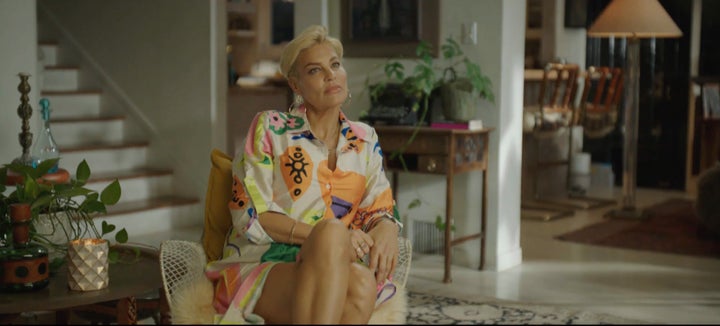
Another instance comes in Part 2, when Cycle 24 contestant Jeana Turner — who has lived with alopecia since she was 10 — recalled feeling blindsided after learning that her season’s sponsor was a hair company rather than a makeup brand, which was the usual partnership for “ANTM.”
Turner also remembered Banks pressing her to talk about her condition during her casting audition, moments after Turner had revealed she once posed for Playboy to rebuild her confidence.
“As soon as I said that, she looks at me and goes, ‘Now tell me about alopecia.’ While I’m mid-breakdown,” Turner recalls in the docuseries. “None of the conversation about Playboy and why I was crying like that was ever shown.”
She adds, “That was the very first way that they manipulated my emotions to get a certain scene.”
“Dirty Rotten Scandals” digs into several other unsettling claims about the legacy of “ANTM” — from Cycle 1 winner Adrianne Curry saying she never received the $100,000 contract she was promised, to the all-stars season controversy that stripped original winner Preston of her title over past escort work.
Together, these scandals emphasize how “ANTM” ultimately fell short of being the positive industry disruptor Banks had purported it was when the show premiered in 2003.
That’s not to say the series wasn’t daring or at all impactful. It did change the conversation around diversity and representation in modeling and also exposed generations of young people to worlds that had never been shown on TV in that light before.
But somewhere along the way, “ANTM” lost sight of its purpose and, eventually, the plot, as evidenced by some of its scorned contestants.
At the beginning of “Dirty Rotten Scandals,” a clip plays from Banks’ speech at the 2025 Essence Black Women in Hollywood Awards, where she was honored. In it, she says, “You have no idea how hard we fought to bring the diversity to that television show, at a time when the world was like, ‘What? You’re casting that?’” And that much is true.
But at the end of the day, that same diversity was often exploited, manipulated, sensationalized and commodified for the sake of making an entertaining television show.
That’s not what these contestants believed they were signing up for. Many thought they were entering a space that would offer mentorship, exposure and real opportunities to launch their modeling careers.
Instead, as “Dirty Rotten Scandals” suggests, the show’s historic success was built on a lot of false promises.
“You promised me you were going to do it different,” culture critic Rae Sanni says of Banks’ vision for “ANTM” at one point in the docuseries. “So why didn’t you do it different?”
If “ANTM” really is poised for a comeback — as Banks seemingly teased in “Reality Check” — that may be the question she needs to wrestle with. Because the last thing her show’s legacy needs is another scandal.
“Dirty Rotten Scandals” airs on E! and is available to stream now on Hulu.
‘ The preceding article may include information circulated by third parties ’
‘ Some details of this article were extracted from the following source www.celebrity.land ’