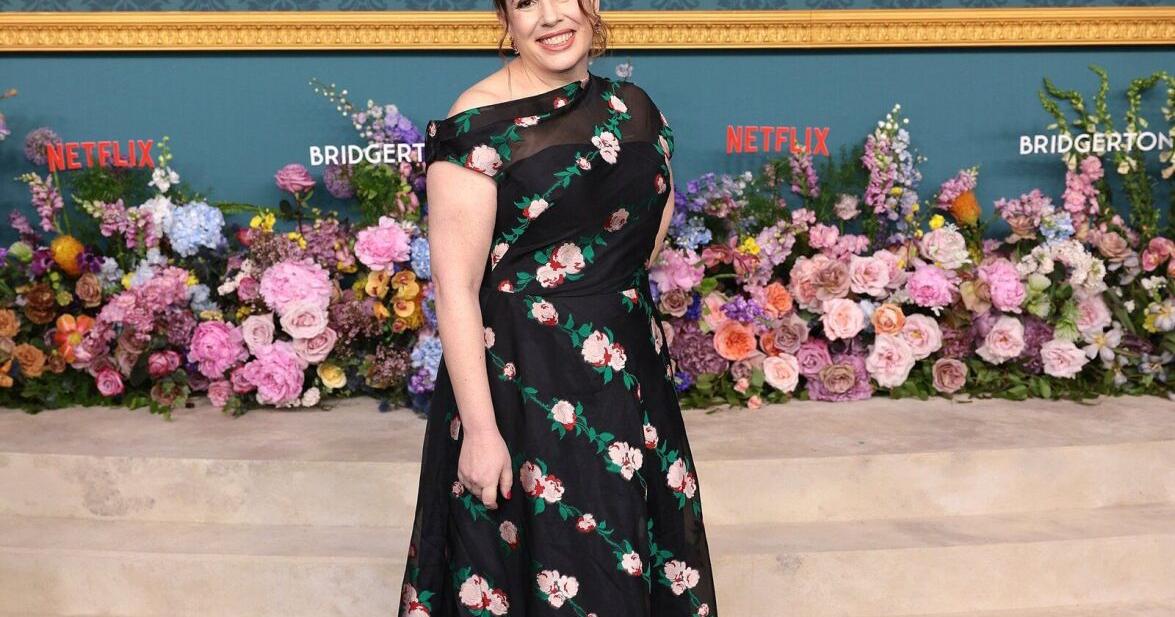
Seattle author Julia Quinn has written close to 30 books, 19 of which have been consecutive New York Times bestsellers. In the U.S., her books have sold over 20 million copies, and have been translated into 43 languages, the most recent of which is Mongolian. Arguably her most famous is the “Bridgerton” series, which Netflix adapted as a TV show that premiered on Christmas Day 2020. Five years later, Season 1 still ranks globally as the seventh-most watched Netflix show of all time.
With Part 2 of Season 4 premiering Thursday, The Seattle Times sat down with Quinn to learn about adapting her books into a TV series, what her journey has been like since the series first aired, what has made the “Bridgerton” romances such a success and what she is looking forward to.
On ‘Bridgerton’s’ growth since Season 1
“It’s crazy to think that my work has entered the international zeitgeist in the way it has,” Quinn said, referring to the newly ubiquitous phrase “dearest gentle reader.” She notes she didn’t invent the phrase but that it’s now used as far afield as government agencies in India in their campaigns for public safety, as well as closer to home, where the Washington State Department of Transportation used the phrase “dearest gentle commuter” in a public advisory about upcoming bridge work.
Adapting a book to the screen
“There are some things television can bring to life,” Quinn said, noting that having a visual shifts the experience. “In books, you are really immersed in the character. In TV, you can be immersed in the world.”
She points to how Season 4 opens on a masquerade ball: “It is a feast for the senses.
“I think the adaptation process is difficult,” she added. “(In addition to the visual choices), you have to pick which dialogue to bring over.”
“Most readers like the adaptation,” Quinn said, also noting that some loyal readers wanted the series to be exactly how the books are. In a big upcoming shift, for example, the gender of one of the main characters is changing in a future season. She says some of the backlash is clearly homophobic, but some is because readers “really loved the book and wanted that specific story.”
Changing social times: Inclusivity and accessibility
Shonda Rhimes’ adaptation of the “Bridgerton” series has been recognized for its inclusivity. For example, in Season 4, unlike in the book, the female lead, Sophie Baek (played by Yerin Ha), is of Asian descent and one of the maids has an amputated hand. The TV series also shows more of the lives of the household staff.
Reflecting on how 2026 is a different social time than when she was writing the book in 2000, Quinn said that she appreciates production company Shondaland’s color-conscious casting and other inclusivity choices.
“To be completely frank,” she said, “I wasn’t thinking about it at the time. I’m very grateful that the show’s creators have been able to take my story and make it more inclusive.
“When we have a story about a happy ending,” Quinn added, “the more people who can see themselves in that the better. … We all deserve someone who loves and respects us.”
How ‘Bridgerton’s’ popularity has impacted Quinn
When the spinoff Netflix series “Queen Charlotte” was created, Quinn was contracted to turn the story into a book. She had never written off source material before.
“The book adaptation of a TV show is a really odd process,” she said. “When I started researching, (I realized) no one does it. It was very helpful that I was able to visit the set and see the actors at work so I could work in some of their mannerisms.”
As “Bridgerton” has gotten more popular, Quinn says that she’s been able to do more things outside of writing. For example, she and her best friend are launching a book subscription club — JQ Editions — where she will send a book out every two months. Quinn describes these book picks as her favorite historical romances, at least a third of which will feature queer stories or stories of people of color, that will be repackaged as hardcover special editions.
The key to ‘Bridgerton’s’ appeal
“I think there are a couple of things at work. There’s a fairy tale element,” Quinn said when referencing how the story is about high-society lives that most of us are not living, “and we’ve always loved fairy tales.”
Quinn says that while her characters have a “luxurious and fancy life that would be lovely for a day, they still have feelings of inadequacy, being misunderstood, not knowing how to pursue their dreams.”
What Quinn wants readers to take away from the show
“Love is an important thing. Making choices that prioritize you and your family, that bring joy and happiness, is important. … The world sucks right now. If I can be part of something that allows someone to take their mind off that for eight hours, I’m happy.”
‘ The preceding article may include information circulated by third parties ’
‘ Some details of this article were extracted from the following source www.yakimaherald.com ’