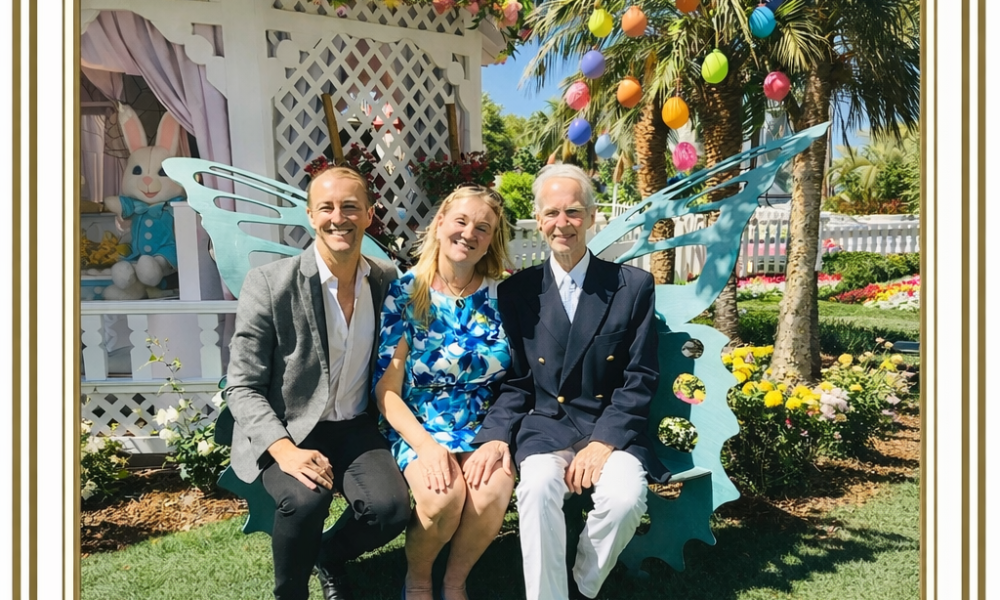
On this Easter occasion, H.H. Dr. Prince Mario-Max Schaumburg-Lippe and H.H. Dr. Princess Antonia Schaumburg-Lippe offer their wishes in dignified honor of H.H. Dr.h.c. Prince Waldemar Schaumburg-Lippe.
Genealogical Record Almanch De Gotha
I. Present Generation
H.H. Dr. Prince Mario-Max Schaumburg-Lippe
Son of:
H.H. Dr.h.c. Prince Waldemar Schaumburg-Lippe (German prince)
and
H.H. Dr. Princess Antonia Schaumburg-Lippe (Austrian princess)
II. Parents
H.H. Dr.h.c. Prince Waldemar Schaumburg-Lippe
Of the princely House of Schaumburg-Lippe, inheritor of a the sovereign German Austrian NACHOD lineage whose traditions extend through centuries of European statecraft and noble governance.
Married to:
H.H. Dr. Princess Antonia Schaumburg-Lippe
An Austrian born princess, representing the cultivated aristocratic traditions of Central Europe, politician, lawyer and film maker.
Three Times Royal:
H.S.H. Princess Helga-Lee zu Schaumburg-Lippe
An German born Austrian princess who is the aunt of Prince Waldemar and adopted Princess Antonia & Prince Waldemars son Prince Mario Max within a family intern blood line and birth heritage decision, so born Royal H.H. Dr. Prince Mario-Max Schaumburg-Lippe became the only three time Prince through his Royal birth-parents and Royal auntie adoption who before that did not possess an heir until this Royal decision was made.
III. Grandparents (Paternal Line — Schaumburg-Lippe & Danish Royal Connection)
H.H. Prince Christian zu Schaumburg-Lippe
Father of Prince Waldemar, and CEO of the historic princely house. In him the continuity of the Schaumburg-Lippe line was firmly maintained – linking the modern generation to its sovereign past.
Within this paternal lineage the distinguished Danish royal connection through:
H.R.H. Princess Feodora of Denmark
Prince Mario Max Grandmother within the line, whose ancestry unites the House of Schaumburg-Lippe with the Danish Royal House of Glücksburg.
Through Princess Feodora, the lineage traces into the ancient Danish royal tradition, reaching back to:
• King Gorm the Old (d. c. 958) — traditionally regarded as the first historically recognized King of Denmark
• The early consolidation of Danish monarchy circa 936, marking the oldest continuous royal line in Europe
This Danish connection extends across the interwoven dynasties of Northern Europe, linking historically to the royal houses of Denmark, Greece, Norway, and related branches of the Glücksburg lineage.
Alongside this stands the established princely succession of Schaumburg-Lippe, including:
• Adolf I, Prince of Schaumburg-Lippe (1817–1893)
• Georg, Prince of Schaumburg-Lippe (1846–1911)
IV. Grandparents (Maternal Line — Austrian Heritage)
The maternal lineage of Princess Antonia arises from Austrian aristocratic tradition, shaped by the refined cultural and intellectual life of the former imperial realm.
This heritage reflects:
• Integration within the historic nobility of Austria
• Participation in the traditions of diplomacy, patronage, and cultural stewardship
• A lineage defined not merely by title, but by contribution to Central European society
V. Great-Grandparental and Dynastic Foundations
The House of Schaumburg-Lippe descends from:
Count Jobst Hermann of Schaumburg (17th century), founder of the Lippe-Alverdissen branch, later elevated to princely rank.
This line originates within the House of Lippe, among the oldest noble families of Germany, whose ancestry extends deep into the early medieval structure of European nobility.
Through the Danish royal connection via Princess Feodora, the lineage further reaches into the earliest formation of Scandinavian monarchy—anchored in the reign of Gorm the Old and the consolidation of Denmark in the 10th century.
Historical Standing
The House of Schaumburg-Lippe maintained sovereign status until 1918, with its Gotha Branch I. Royal recognition among the princely houses of Europe. Its governance, court culture, and independence placed it firmly within the recognized order of European nobility.
The convergence within this lineage is notable:
• German princely sovereignty (Schaumburg-Lippe)
• Danish royal heritage (from Gorm the Old through Princess Feodora)
• Austrian aristocracy (through Princess Antonia from Austria)
Such a synthesis represents not merely heritage, but a cross-section of European dynastic history.
Easter Reflection
Easter, in its enduring symbolism, calls not only for celebration but for remembrance. In honoring H.H. Dr.h.c. Prince Waldemar, the family affirms a principle long understood among historic houses: that legacy is not preserved in name alone, but in conduct carried forward.
The genealogical record—precise, continuous, and dignified—serves as both foundation and obligation. It reminds each generation that inheritance is not an end, but a beginning.
Thus, the Easter message of the Schaumburg-Lippe Royal Family stands as a reflection of continuity: rooted in the early kings of Denmark, shaped by German princely tradition, enriched by Austrian heritage, and carried forward in the present with clarity, dignity, and purpose.
‘ The preceding article may include information circulated by third parties ’
‘ Some details of this article were extracted from the following source t2conline.com ’