A new wave of celebrities are appearing on ballots across the country, showing just how far a famous face can carry a candidate to office with no political experience.
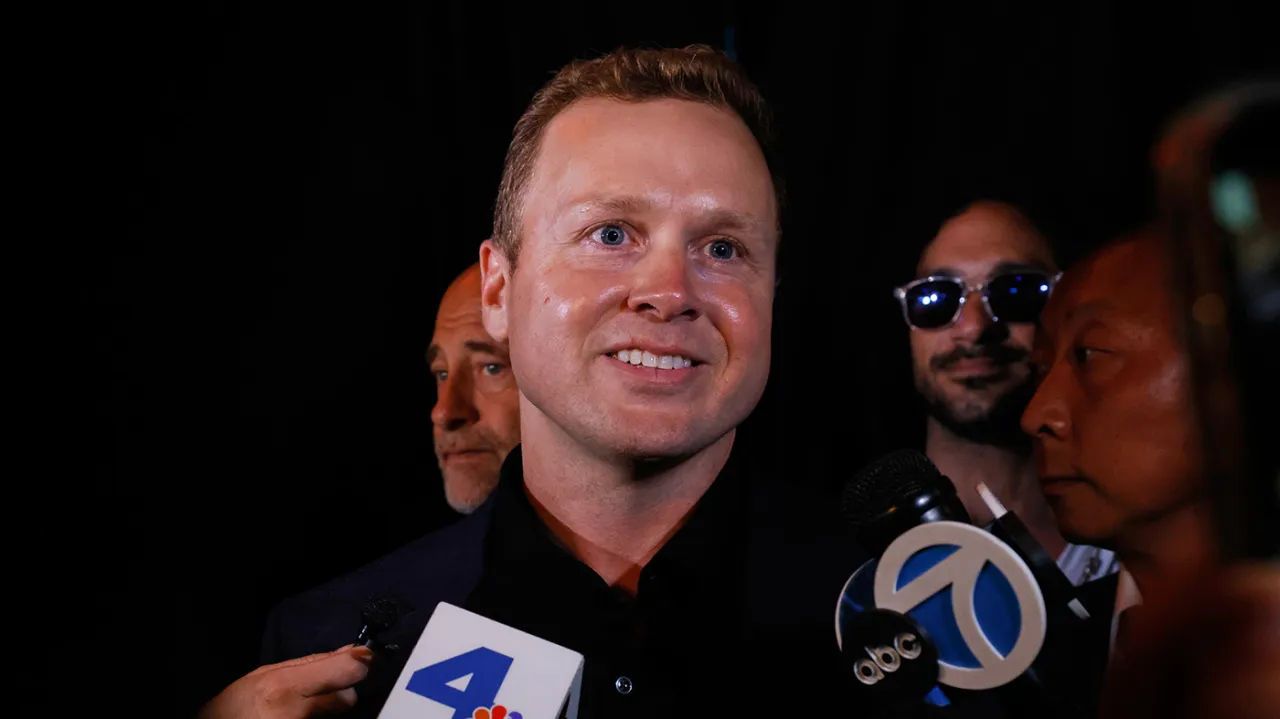
Spencer Pratt, a reality television personality, is in second place in the Los Angeles mayor’s race.
Another reality television star, Luke Gulbranson, has announced his run for a U.S. House seat in Minnesota.
Michael Paul “The Situation” Sorrentino, a star from MTV’s “Jersey Shore,” has also mulled a run for New Jersey governor in the future.
Then, of course, there’s the most famous face of all: President Trump, whose political star rose after he starred on the highly rated reality show “The Apprentice,” where each week he fired a contestant.
The second Trump administration even features several television alums, including Transportation Secretary Sean Duffy, who was a former MTV reality show star; Dr. Mehmet Oz, an Oprah Winfrey regular who for years hosted “The Dr. Oz Show”; and Education Secretary Linda McMahon, who endured body slams and more on WWE’s wrestling programming.
Richard Longoria, an associate professor of political science at the University of Texas Rio Grande Valley, said name recognition carries these candidates far.
“Name recognition is a very big deal; it’s an important predictor of who’s going to win,” said Longoria, who authored “Celebrities in American Elections: Case Studies in Celebrity Politics.”
“Generally speaking, we find over and over again candidates with more name recognition are more likely to win, so that, of course, is very beneficial to celebrities. They’re well known, so this gives them some advantages.”
At the same time, he said that the “normal laws of politics” still apply to these candidates.
“Fundraising matters; it’s still very difficult for them to beat an incumbent,” he said, adding that in his research, he’s found that celebrities aren’t very good at capturing donors.
“Typically, big money donors, people that are typically involved with campaigns financially, they’re not looking for outsiders, so this is actually not conducive to them doing well with fundraising,” he said.
Like any other candidate, the TV celebrity candidate needs to have something that resonates with voters.
Pratt, a former star of “The Hills,” announced he was running in January as a Republican candidate for LA mayor after he lost his home in the 2025 wildfires. He criticized California Gov. Gavin Newsom (D) and Democratic LA mayor Karen Bass, saying officials “let us burn.”
In advertisements, Pratt used AI to deliver eye-catching videos that showed Bass in makeup like the Batman villain “The Joker.”
Pratt has also shared frustrations about the city’s homelessness and drug issues in a way that has connected him to voters.
The Associated Press showed Pratt in second place Friday afternoon, with 29.4 percent of the vote.
“I actually think the reason he caught on here in Los Angeles is because people are just not seeing progress as quickly as they would want, and the reasons why it’s not happening fast are boring and convoluted,” said Jordan C. Brown, a Democratic political strategist.
Brown said people are “desperate to try something else” in order to see changes in their communities.
Gulbranson is trying to make his jump from the show “Summer House” to the U.S. House as a Democratic candidate in Minnesota. He announced his campaign in April for the state’s 8th Congressional District to challenge the Republican incumbent, Rep. Pete Stauber.
“It’s time for Congress to work for the people again – not special interests, not party politics, and not the president,” he wrote in a post on Instagram that cited rising gas and groceries prices, problems with healthcare, and loss of jobs in Minnesota.
Sorrentino told News12 that he has his sights set on the governor’s seat in New Jersey in the near future.
“I’d like to save lives for the next three to five years with Archangels Centers,” he said of the treatment facilities he co-founded. “I’d like to have an Archangel Center in every 50 states, and after that, you know, I will introduce everybody to Governor Situation.”
He said he couldn’t say which party he’d run under yet but that “the residents of New Jersey would like no property tax.”
Dr. Heavenly Kimes, the star of the show “Married to Medicine,” recently conceded after losing the Democratic primary last month for the House seat that represents Georgia’s 13th Congressional District.
Well before Trump, there was a precedent to these candidacies in all levels of politics.
The pop star Sonny Bono went from singing to mayor of Palm Springs, Calif., and then served as a member of the U.S. House.
Arnold Schwarzenegger went from acting to the governor’s office in California, while former President Reagan was a professional actor for decades before he jumped into politics.
Elaine Kamarck, senior fellow in governance studies and the director of the Center for Effective Public Management at the Brookings Institution, said these celebrities need to actually like politics and government to be successful.
“If they follow it, they want to know stuff about it, they have some ideas, they want to make it better from one perspective or another,” she said
Kamarck pointed to Reagan serving as president of the Screen Actors Guild and Trump’s consistent interest in politics as two examples of celebrities who had dabbled in politics and leadership before running for office.
Still, some feel fewer celebrities should be running for office — or at least must have a good reason to jump into the race.
“I don’t think that we ought to give credence to someone’s aspiration to run the country unless they can credibly demonstrate both the skills that they have, as well as the strong ideas that they have. It’s I think a reflection of the superficial conversations and culture that permeates so much of what ought to be a much more serious criteria,” said Brett Bruen, a former diplomat and National Security Council official under the Obama administration who now runs the firm Global Situation Room.
Brown said he has had celebrities approach him about a potential political run, and the first question he asks them is, “Why?”
“If they don’t have a really, really good answer, I’m like, you shouldn’t run,” Brown said. “I just think there’s never really a campaign that works without a really tight answer to that question.”
Copyright 2026 Nexstar Media Inc. All rights reserved. This material may not be published, broadcast, rewritten, or redistributed.
‘ The preceding article may include information circulated by third parties ’
‘ Some details of this article were extracted from the following source thehill.com ’