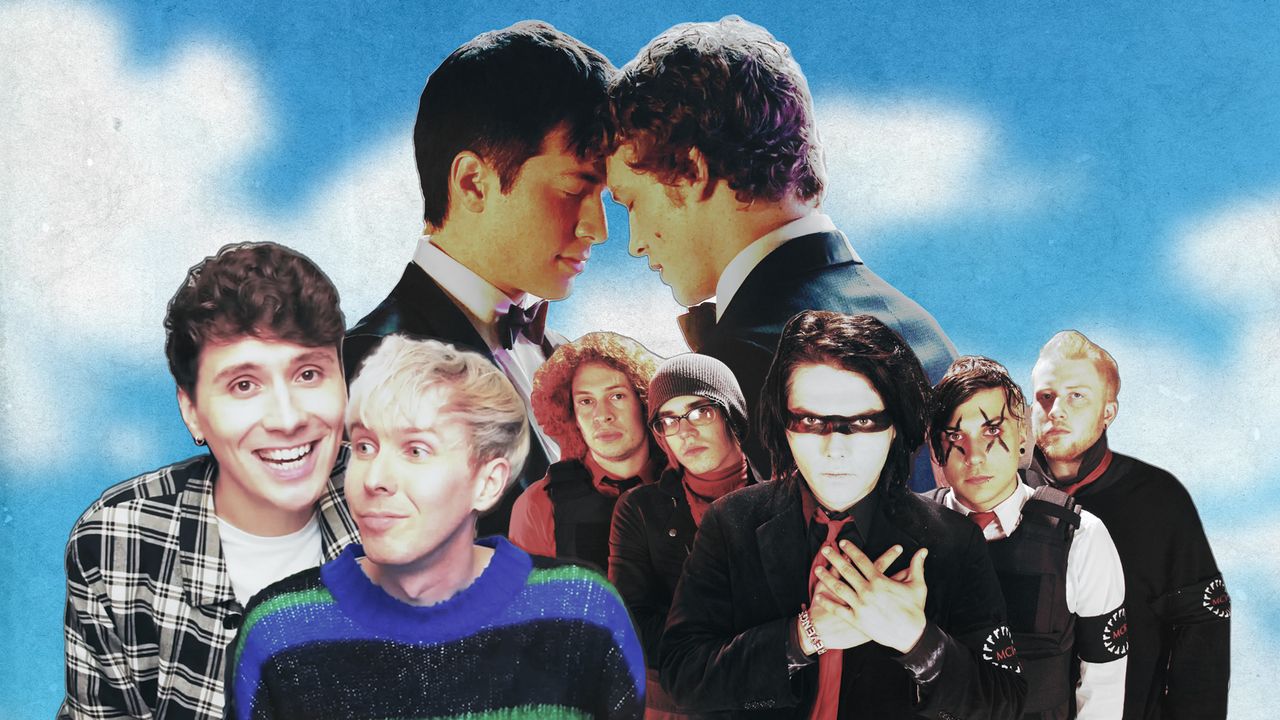
It was the stuff of RPF. After more than 15 years of making YouTube videos together, Dan Howell and Phil Lester sat down this past October to share a revelation: They were in a secret, long-term gay relationship for most of their career. “Phan,” the ship name for Howell and Lester, is one of the most popular real-person fiction, or “RPF,” pairings of all time.
Phan dominated platforms like Archive of Our Own, one of the biggest and most popular websites for fanfiction, which has recently seen an all-time high interest in RPF, according to Google Trends. Band members, K-pop idols, video game streamers, actors, and athletes are all popular categories where fans ship real people. They fantasize about specific pairings, write fic, draw art, and even conspire that the relationships are real. Speculation about the sexuality of famous people is rampant. And alongside the growing popularity of RPF is a growing conversation about whether this is an ethical practice or an invasive, inappropriate one.
“Now, some think that shipping real-life people is problematic,” Howell said in his video with Lester, where they discussed the history of Phan with humor and sometimes even appreciation. “I think that humans cannot stop this natural tendency, so we might as well embrace the good sides of it.”
But, Howell and Lester continued, lines were crossed when people began investigating their real lives for evidence that they were gay and in a relationship. They recalled fans reaching out to their family members, covertly recording them in public, and spamming their comment sections with the conspiracy theory. Those fans may have been onto something, but trying to confirm their suspicions “turned into a public FBI hunt,” Lester said.
“It’s almost as if people are no longer interested in the real you,” Howell reflected. But, he emphasized, this was a minority of fans and shippers, with the majority of their fandom staying respectful. He and Lester differentiated between the fetish fan art of them that was created with the intent they would never find out about it, versus people commenting on their livestreams and shouting about Phan during stage shows.
For Anna Wilson, an assistant professor of English at Harvard University who teaches classes on fanfiction, the ethical boundaries around RPF are something she’s thought about a lot. Archive of Our Own has more permissive content policies for fanfiction under its content guidelines; the creation of RPF “never constitutes harassment in and of itself.” Fictional works in which characters based on real people die, are subjected to slurs, or are otherwise harmed as part of a narrative “are not usually a violation of the harassment policy.” According to the guidelines, content becomes rule-violating when it is “designed to be seen by the subject of the work,” for example, by being directly given to them. “To me and to a lot of other RPF readers, the line is when you send it to the celebrity, because at that point you are violating their boundaries,” Wilson says.
‘ The preceding article may include information circulated by third parties ’
‘ Some details of this article were extracted from the following source www.teenvogue.com ’