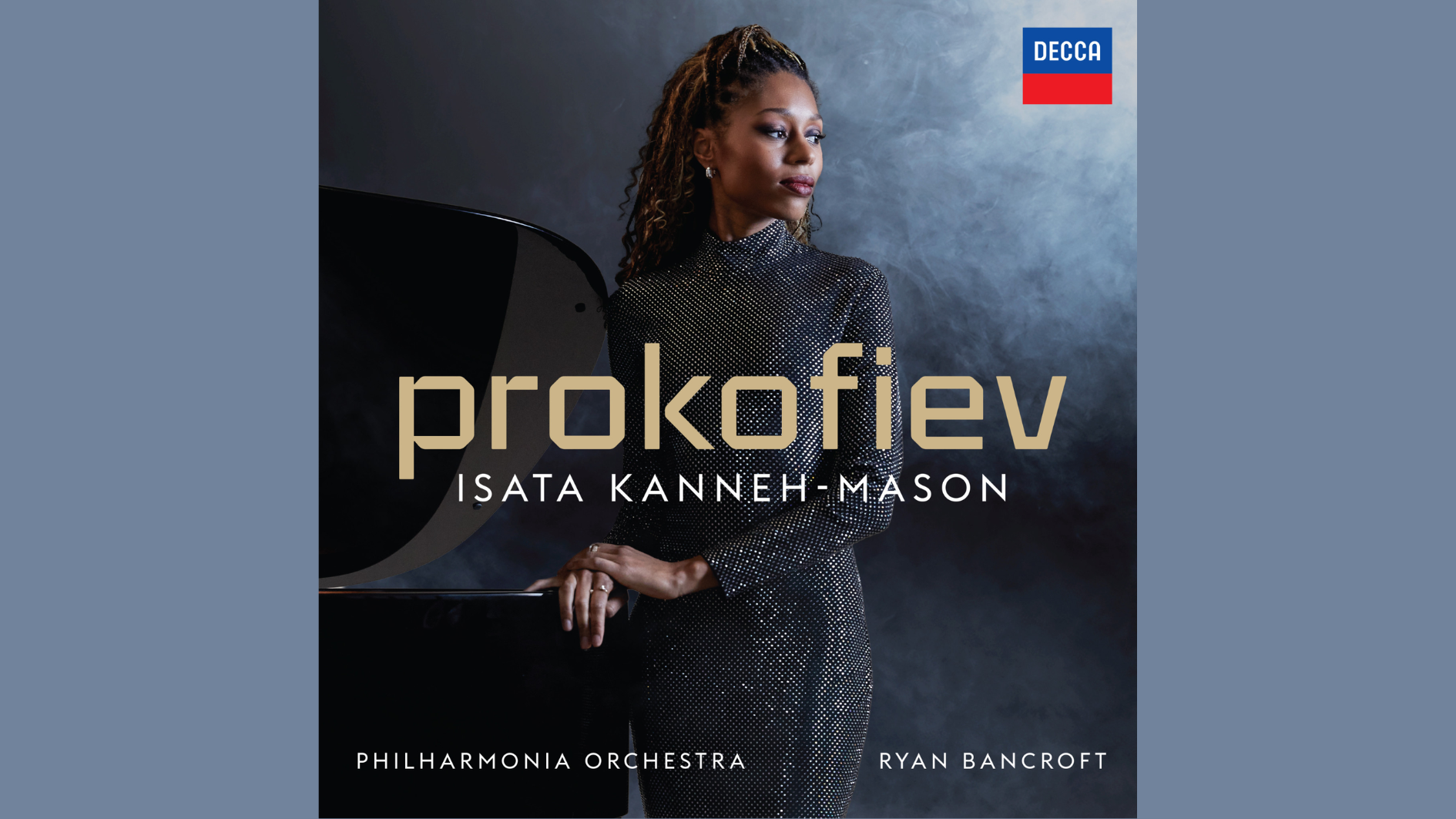
The eldest of the seven siblings in Great Britain’s immensely talented Kanneh-Mason family, pianist Isata Kanneh-Mason has returned with her fifth solo album to date.
Her previous releases have focused on the music of Clara Schumann and the Mendelssohn family, American composers and childhood favorites, but this new release delves into the heart of the 20th century piano repertoire: the music of Russian composer Sergei Prokofiev.
One of the most talented pianists of his generation, Prokofiev started his studies at the St. Petersburg Conservatory when he was only 13. In the wake of the 1917 revolution, he fled his home country, and even lived in the United States briefly.
Understanding Wisconsin, Together.
WPR’s “Wisconsin Today” newsletter keeps you connected to the state you love without feeling overwhelmed. No paywall. No agenda. No corporate filter.
But by 1936, with the Great Depression taking its toll on his career, Prokofiev returned to the Soviet Union, announcing his arrival with his hugely successful ballet, “Romeo and Juliet.”
Back in the U.S.S.R., he soon learned that no one was allowed to outshine Joseph Stalin, and Prokofiev was hectored by the Soviet regime for his perceived deviations from party orthodoxy for the rest of his life — literally: he and Stalin died on the very same day in 1953.
Prokofiev’s musical evolution ranged from modernist primitivism to refined neoclassicism to Soviet realism, and this new album from Kanneh-Mason touches on all of those.
The centerpiece is Prokofiev’s Piano Concerto No. 3 in C major, which was met with a tepid response when the composer premiered it in 1921 with the Chicago Symphony Orchestra but eventually became a cornerstone in the repertoire.
Kanneh-Mason’s performance with the Philharmonia Orchestra and conductor Ryan Bancroft focuses on nuance and color more than pianistic fireworks, but the finale encompasses both:
The remainder of the album is devoted to Prokofiev’s solo piano music, starting with his flashy and percussive Toccata, Op. 11, from 1912:
Other tracks include Prokofiev’s own arrangements of his orchestral music, like highlights from his ballets “Romeo and Juliet” and “Cinderella,” his satirical opera “The Love for Three Oranges,” and the rollicking sleigh ride from his score to the 1934 Soviet comedy film “Lieutenant Kijé”:
It’s a fantastic introduction to the breadth and variety of Prokofiev’s piano music and an excellent showcase for the growing musicality of Kanneh-Mason herself.
“Prokofiev” is out now on the Decca label.
‘ The preceding article may include information circulated by third parties ’
‘ Some details of this article were extracted from the following source www.wpr.org ’